Ringworm is a fungal skin disease, despite its name. It can involve hair loss, scaling, crusting and redness, with itching that varies between affected animals. A circular patch does not establish the diagnosis. Vets investigate the skin changes and use appropriate sampling to identify what is involved.
For pet parents, the practical questions come in stages: what the skin findings mean, what the tests establish, and what the household needs to do. Keep those stages separate. A suspected case, a laboratory finding and a follow-up decision are not interchangeable labels.
What the skin changes can look like
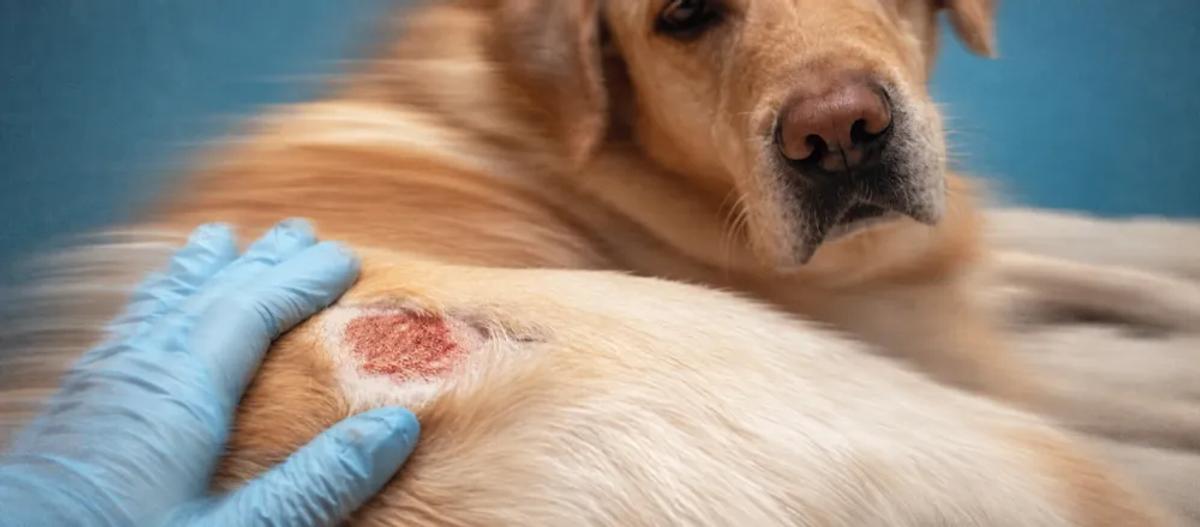
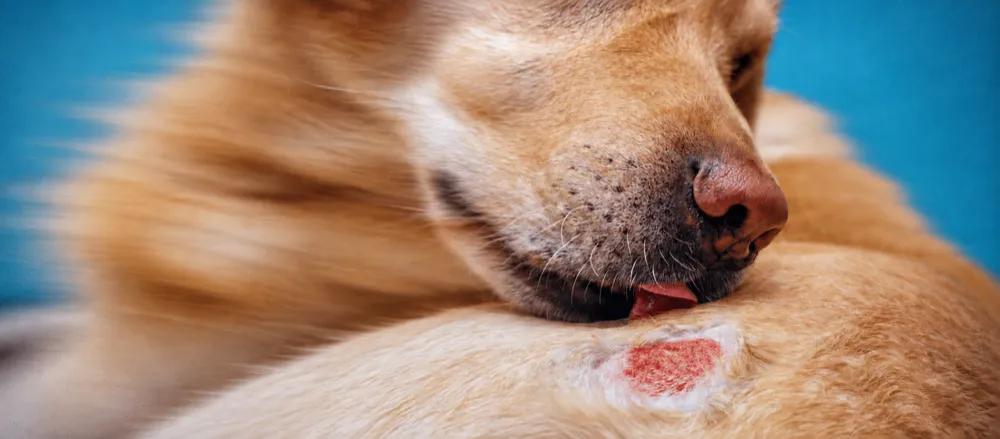
The appearance can vary. The official dermatophytosis guidance describes combinations of hair loss, scales, crusts and other skin changes, including lesions that are asymmetrical. Itching can range from absent to severe. A dog's level of scratching therefore cannot confirm or exclude ringworm by itself.
A 2025 Egyptian study gives a specific example of that variety. Investigators described broken hairs, redness and rounded or asymmetrical lesions among affected dogs and cats, with scaling and crusting in more advanced lesions. In the dogs, lesions were observed particularly on the rump, abdomen and head. Those observations come from that study population; they are not a map for diagnosing every dog.
A vet may need to distinguish these findings from other causes of dog skin disease. The separate guide to mite-related skin disease explains another diagnostic pathway. These comparisons help explain why an apparently familiar patch still needs assessment. They should not become a picture-matching exercise at home.
How the diagnosis is investigated
Start by asking what the vet is trying to establish with each part of the investigation. Examination describes the affected skin and hairs. Direct examination of collected material and fungal culture provide different kinds of evidence, and further identification may be needed. The results have to be interpreted in the clinical context.
A Wood's lamp can help locate suspect hairs for examination or culture. It is a tool used during the investigation, rather than a standalone confirmation. The Egyptian study included an observed example of fluorescent affected hairs in a dog, but one example does not establish how well the tool performs in every case.
Culture and molecular testing also need clear explanations. In a 2025 study in Türkiye, researchers sampled 150 animals with skin lesions, including 45 dogs and 105 cats. They used direct microscopy and fungal culture, then performed molecular testing on isolates obtained from culture-positive samples. That last detail matters: the molecular work was carried out on cultured material.
It would be incorrect to describe that study as validation of every test performed directly on a dog's skin. Nor does its protocol mean your dog automatically needs the same tests. It shows how investigators used different methods to answer successive identification questions in their own selected group of animals.
The Egyptian study also combined the characteristics of fungal isolates with molecular techniques for identification. Both papers provide examples of laboratory investigation. Neither gives an Indian pet parent a universal test sequence or a treatment choice.
If your report mentions PCR, ask what was sampled and how the result is being interpreted. The official guidance notes that detecting dermatophyte DNA does not necessarily establish active infection. A positive result is something for the vet to explain alongside the clinical findings and the other evidence, rather than a result you should interpret in isolation.
What a household care discussion should cover
Ringworm can spread between animals, mainly through direct contact. Contaminated objects such as grooming tools, bedding and collars can also be involved, although the guidance describes that route as less common. This is why a diagnosis leads to questions about shared belongings as well as the affected dog's skin.
Tell the vet which animals live together and which items they share. A brush used for both dogs and a bed used by more than one pet are concrete details worth mentioning. Ask which parts of the household routine need to change while the case is being managed, rather than trying to design a restriction plan from a general article.
The household discussion should include cleaning washable items to reduce contamination. Ask for instructions that fit the actual items in your home.
People can also develop ringworm after animal-associated exposure. The true rate of transmission from animals to people is unknown, so there is no reliable percentage here to tell you the chance for your household. If someone develops a skin concern, seek medical advice and mention the animal's diagnosis. Human treatment decisions belong with the clinician seeing that person.
What follow-up needs to establish
Improvement in the skin is useful information, but follow-up has a wider purpose than deciding whether a patch looks less obvious. The official guidance describes monitoring that includes the clinical response and fungal assessment, including culture, with a Wood's lamp where appropriate. Your vet determines how those parts apply to the case.
Ask what the next appointment is intended to establish. Is the vet reviewing the appearance, interpreting a new sample, or bringing several findings together? Knowing that purpose makes a follow-up result easier to understand and avoids treating a photo as a substitute for the assessment.
Keep the original laboratory report with the visit history. When a new report arrives, ask how it relates to the earlier finding rather than assuming that different test names mean the same thing. In particular, the distinction between detecting fungal DNA and assessing active infection still belongs in the discussion.
The care plan should explain who will decide when treatment or household measures can change. Don't choose that point from a rule intended for another animal or from a fixed number of negative tests found online. Nuzzy's PetLife can hold the vet-visit history, while the clinic explains what each follow-up finding means for your dog.
Frequently asked questions
How do dogs get ringworm?
Transmission occurs mainly through direct contact between infected and uninfected animals. Contaminated belongings, including grooming tools, bedding and collars, can also be involved. Tell the vet about shared items and contact with other animals so the household advice fits the situation. The presence of a suspicious patch still requires assessment; possible contact alone does not establish a diagnosis.
Can I get ringworm from my dog?
Ringworm can pass between animals and people, but the true animal-to-human transmission rate is unknown. Discuss household precautions and cleaning with the vet rather than relying on an invented risk percentage. If you develop a skin concern, contact a medical professional and mention the dog's diagnosis. Advice for your dog's treatment should not be reused as treatment advice for a person.
Sources
WAVD, Summary of clinical consensus guidelines for dermatophytosis (2023 summary of 2017 guidance)