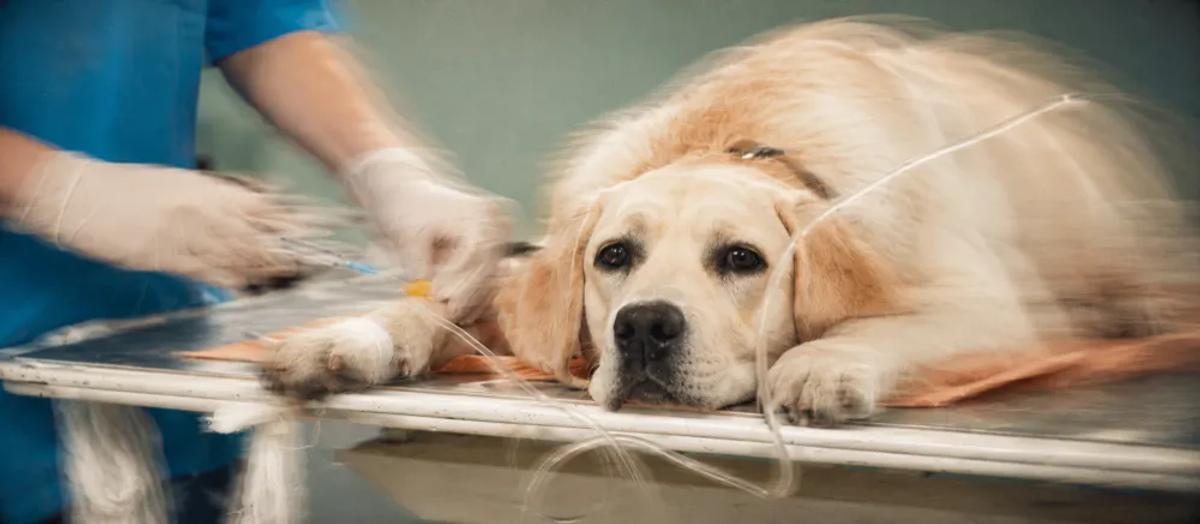
Pyometra in dogs is a potentially life-threatening infection in which pus accumulates in the uterus. Signs can include poor appetite, lethargy, vomiting, increased thirst or increased urination. Some dogs have vaginal discharge; others do not. Suspected pyometra needs prompt veterinary care, and removal of the ovaries and uterus is the preferred treatment approach.
If you are worried that your dog may have pyometra, contact a vet promptly. You do not need to identify the type of infection at home before seeking help. The absence of discharge cannot rule it out.
Open and closed pyometra
The terms open and closed refer to the cervix, the entrance to the uterus. They help explain why two dogs with the same underlying condition may have different visible signs. The infection is within the uterus in both cases, but the route by which its contents may drain differs.
When the cervix is open, discharge can pass out of the uterus. It may appear pus-like or bloody. Visible discharge can therefore be one clue, but an open cervix does not mean that the dog is well or that the infection can be managed by watching the discharge at home.
With a closed cervix, the uterine contents cannot drain in the same way. Abdominal distension can occur, while vaginal discharge may be absent. Waiting for discharge to appear is not a reliable way to decide whether veterinary attention is needed.
This distinction is useful because it prevents a single missing sign from becoming reassurance. A dog who is lethargic, eating poorly or drinking and urinating more still needs an assessment of those changes. The pattern must be investigated rather than matched to an online description until every listed symptom is present.
Signs to describe to the vet
Commonly reported changes include reduced appetite, lethargy, increased thirst and increased urination. Vomiting can also occur. Describe what has changed for your dog, when you first noticed it and whether visible discharge is present. The reproductive history is another part of the clinical assessment.
The signs are reasons to seek investigation, not a home diagnostic test. A list of symptoms cannot establish that pyometra is the cause, and a dog does not have to match every item for the concern to matter. The vet combines the history with examination and other findings.
Pyometra can lead to serious complications, including sepsis and rupture of the uterus. These possibilities explain the need for prompt treatment, but they do not allow an article to predict the outcome for an individual dog. Assessment establishes the current condition and the care required.
When you call, give the clinic the symptoms first. Have any known reproductive or surgical history available as well. If you are unsure which operation was previously performed, say so and bring the record if you can. Do not delay contacting the clinic while trying to reconstruct a perfect history.
How the condition is investigated
Investigation usually brings together the patient's history, clinical signs, examination and imaging. Ultrasound or abdominal radiographs can help assess the uterus. Blood tests can provide further information about the illness. These findings serve different purposes and are interpreted together.
A finding on imaging is considered alongside the rest of the assessment; the vet is not relying only on whether a pet parent has noticed discharge. This is especially relevant when the cervix is closed and the outward picture is less obvious.
The investigation also informs the treatment discussion. Ask the clinic to explain what it has found, what needs to happen next and whether the dog requires ongoing hospital care. These questions keep the conversation focused on the present illness, rather than on a general description of routine spaying.
Treatment and monitoring
Removal of the ovaries and uterus, called ovariohysterectomy, is the preferred treatment approach for pyometra. It removes the infected uterus as part of addressing the disease. Treatment of an already ill dog is a different situation from planning an elective procedure in a healthy dog.
The wider plan can include supportive care and antimicrobials, chosen according to the veterinary assessment. The need to treat an infection does not mean that a pet parent should select an antibiotic or try to manage the condition without investigation. Medication decisions belong within the clinical treatment plan.
Nonsurgical management is used only in selected circumstances. It requires close monitoring because the dog may deteriorate and treatment can have unwanted effects. Recurrence is also possible. This is a supervised clinical decision, not an interchangeable home alternative to surgery.
Monitoring matters because pyometra can affect more than the uterus. Sepsis and uterine rupture are serious possible complications. The team's assessment of the dog and response to treatment therefore matter more than a general promise that recovery takes a particular number of days.
Before your dog goes home, obtain the clinic's written instructions and follow-up plan. Make sure everyone sharing her care has the same information and knows how to contact the practice with concerns. Use the plan given for this illness and treatment, rather than an account of another dog's routine operation.
Keep the medical documents and visit details available for follow-up. Nuzzy PetLife supports vet-visit history, which can help retain that record. Organising documents supports communication; it does not replace the urgent veterinary care a suspected infection needs.
Future prevention and previous surgery
Ovary removal prevents ovarian cycling and pregnancy. Ovariohysterectomy removes the ovaries and uterus and treats uterine disease. The exact procedure should be named in a prevention discussion so that its purpose and the tissues involved are clear.
Our guide to dog reproductive health provides the broader cycle and prevention context. If the question is an elective procedure, spaying and individual care covers the separate discussion about the operation and its timing. Neither replaces assessment of a dog who is currently unwell.
A history of spaying should still be shared with the vet. Rare remnant-related disease can occur when reproductive tissue remains under relevant hormonal influences. The word spayed therefore should not be used to dismiss every possible reproductive cause of illness without assessment.
Questions about pyometra
What signs can occur with pyometra?
Signs can include low appetite, lethargy, vomiting, increased thirst or increased urination. Vaginal discharge may occur when the cervix is open, while a closed cervix can prevent drainage. These signs need veterinary investigation rather than home diagnosis.
Can pyometra occur without visible discharge?
Yes, a closed cervix can prevent the uterine contents from draining, so visible discharge may be absent. Abdominal distension can occur. Do not use the lack of discharge to rule out pyometra in an unwell dog.
How is pyometra treated?
Prompt veterinary treatment is needed, and removal of the ovaries and uterus is the preferred approach. Supportive care and antimicrobials may form part of the plan. Nonsurgical treatment is reserved for selected cases that need close monitoring, and recurrence is possible.
Sources
Cornell Riney Canine Health Center. Dog estrous cycles (2023).
Cornell Riney Canine Health Center. Pyometra.
Canine Pyometra: A Short Review of Current Advances. Animals (2023).