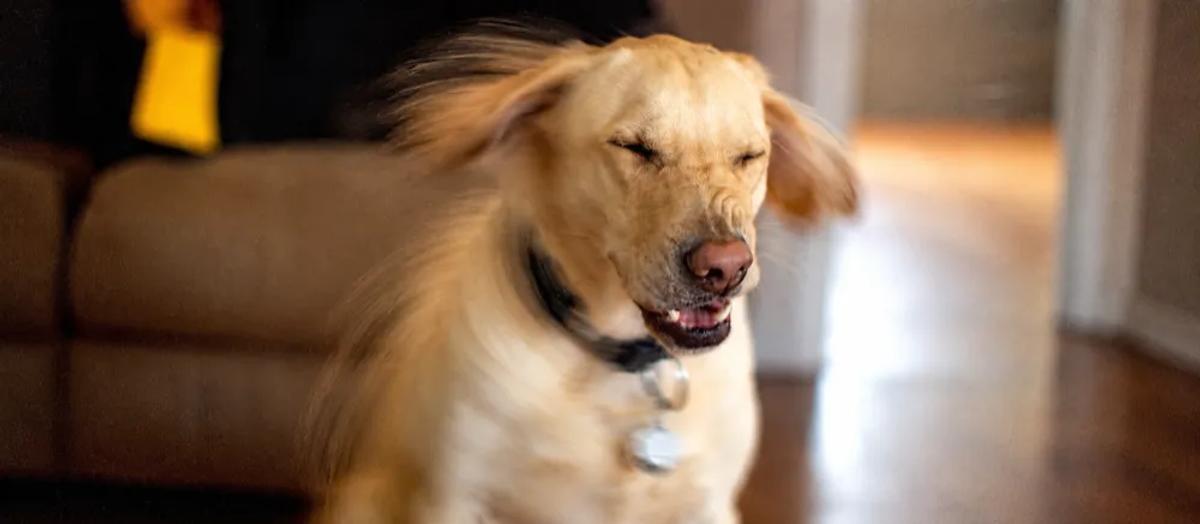
Reverse sneezing is a series of rapid, noisy inward breaths that can sound alarming. Many dogs with mild, occasional episodes return to normal on their own. Frequent or severe episodes need veterinary assessment, and a breathing noise should not automatically be labelled reverse sneezing.
If your dog is struggling to breathe, has a bluish tinge around the gums or muzzle, becomes weak or collapses, seek emergency veterinary help. Do not wait to see whether the sound turns into a more familiar episode.
What reverse sneezing looks and sounds like
The sound comes in repeated inward breaths, often described as snorting. It can make a pet parent think their dog is in breathing trouble.
That resemblance is why the distinction needs care. Hearing a snort does not prove that an episode is harmless. A vet can help establish whether what you are describing is reverse sneezing or something else.
For dogs with mild, sporadic reverse sneezing, the episode often resolves on its own and the dog returns to normal quickly. That is reassuring once the event has been identified correctly.
If your dog is bringing up material after coughing or retching, describe that too. The guide to dogs bringing up white foam addresses that different question.
Possible triggers
Dust, allergens and other irritants in the upper airway may be involved in reverse sneezing. Excitement is another possible trigger. In many cases, no specific cause is identified.
If you have noticed a repeated pattern, mention it during the appointment. You might know what your dog was doing immediately beforehand even when you cannot identify the noise itself.
You do not need to find a trigger before asking for help. It is acceptable to tell the vet that the episodes seem unpredictable.
When the episode needs veterinary assessment
Arrange an assessment for frequent or more severe episodes. A dog that seems fine afterwards can still benefit from having a recurring breathing noise checked.
Tell the vet whether this is new, whether the episodes are becoming more frequent, and what your dog is like between them. Describe any breathing difficulty directly instead of putting everything under the label of reverse sneezing.
There is no single duration in this article that makes an episode safe. The way your dog is breathing matters, and uncertainty is a reason to seek veterinary guidance.
It can be frustrating when a noise stops before anyone else hears it. Even then, describe what you saw and how it differed from your dog's usual behaviour. Avoid trying to provoke another episode for a demonstration.
Signs of breathing distress
Breathing distress is an emergency. Signs can include increased effort through the abdomen while breathing, a bluish tinge to the gums or muzzle, and weakness or collapse.
You do not need to see every sign. If your dog appears to be struggling for breath, take them to the nearest emergency veterinary clinic and call ahead when possible.
A dog can make increased breathing sounds during distress, which is another reason not to assume that every snort is reverse sneezing. If you are unsure, seek help.
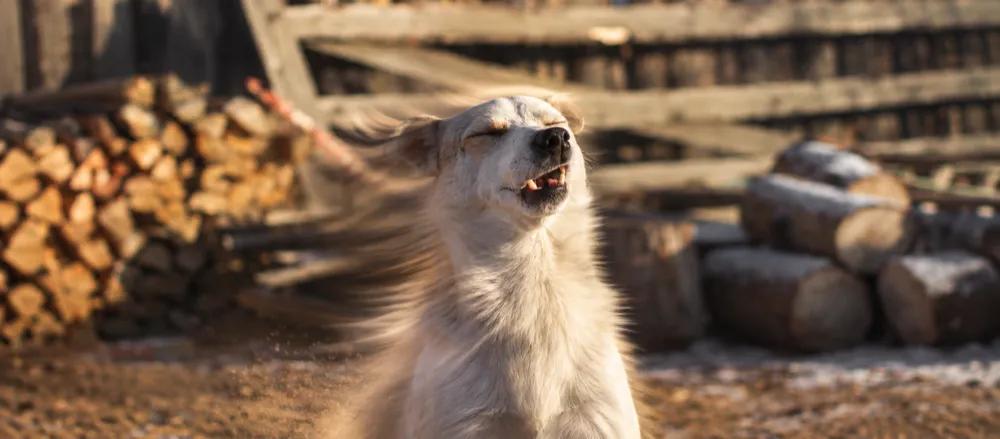
Helping your vet understand the episode
Give the clinic a short description of the event. Plain language is enough.
Useful observations include:
- Describe whether the sound seemed to happen as your dog breathed inward.
- Explain what your dog was doing before it started.
- Say whether similar episodes have happened before and whether the pattern has changed.
- Describe how your dog behaved afterwards, including any continuing breathing difficulty.
Do not delay urgent care to collect those details. Tell the clinic what you already know.
If your vet has previously identified reverse sneezing, ask what changes should prompt another assessment. That gives you a plan tied to your dog's history instead of relying on a stranger's description of a different dog.
Frequently asked questions
Can reverse sneezing stop on its own?
Yes. Mild, occasional episodes often settle without treatment, and dogs commonly return to normal quickly. That applies to reverse sneezing that has been correctly identified. Frequent or severe episodes need assessment.
Why does my dog snort repeatedly and then seem normal?
That pattern may be reverse sneezing. It involves rapid inward breaths and can resolve quickly. Irritants or excitement may be involved, although a cause is not always identified. Ask your vet to assess the event if it is new, recurrent or difficult to distinguish from breathing trouble.
When should I get help for the breathing noise?
Seek emergency care if your dog is struggling to breathe, becomes weak or collapses, or shows a bluish colour around the gums or muzzle. Frequent or severe episodes that seem like reverse sneezing also warrant veterinary assessment. If you cannot tell what is happening, contact a vet for help.