Dog reproduction involves a hormone-controlled cycle, the meeting of sperm and an egg, and the development of a pregnancy in the uterus. A female dog can ovulate without mating, and mating does not confirm pregnancy. When pregnancy occurs, it lasts about 63 days from ovulation. The date you see dogs mate is a less precise starting point for predicting birth.
For pet parents, understanding those separate events helps make sense of visible heat signs, an unintended mating or a veterinary pregnancy assessment. It also helps distinguish routine reproductive changes from an illness that needs urgent attention. A dog who is unwell needs assessment on her own symptoms, rather than an assumption that everything is part of her cycle.
Female hormones and reproductive organs
The female reproductive cycle involves communication between the brain and the reproductive organs. Signals from the hypothalamus influence the pituitary gland, which releases follicle-stimulating hormone and luteinising hormone. These hormones help regulate follicular development in the ovaries and the hormonal changes associated with ovulation. The names can sound complicated, but they describe different parts of the same biological process.
Estrogen rises during the period before estrus. Progesterone increases around ovulation and remains relevant during the phase that follows. Changes in these hormones are associated with changes in the dog's reproductive tissues and receptivity to mating. A visible sign, such as discharge, is therefore one part of a wider cycle rather than a direct view of everything happening inside her body.
After ovulation, a dog's eggs still need to mature in the oviduct. This is the tube in which fertilisation takes place. Sperm and an egg do not necessarily meet and form an embryo on the day of mating. The time needed for egg maturation is one reason the sequence cannot be reduced to a single date on a calendar.
Early embryos subsequently move into the uterus. Egg maturation, fertilisation and movement into the uterus are separate stages. Knowing the distinction helps explain why a vet asks about the cycle and any observed mating before discussing pregnancy assessment. The history gives context, while the examination or tests address what can be established at that stage.
Male reproduction and sperm
Male reproduction follows a different pattern from the female heat cycle. Hormonal signals help control sperm production, and sperm undergo maturation in the epididymis. That maturation is part of acquiring the ability to fertilise an egg. It is separate from the changes that occur later, after semen enters the female reproductive tract.
Following ejaculation, dog sperm can survive in the female reproductive tract for several days. Meanwhile, eggs complete their maturation after ovulation. Those overlapping processes help explain why an observed mating date and the date of fertilisation may differ. They do not provide a reliable home method for deciding whether a particular mating will result in pregnancy.
Male gonadectomy is one veterinary option for preventing reproduction. The operation, its purpose and the individual care plan deserve a separate discussion from questions about a female dog's cycle.
Luteinising hormone helps regulate testosterone synthesis, which is needed to maintain sperm production. Follicle-stimulating hormone also has a role in that process. In female reproduction, those same pituitary signals participate in follicular development, ovulation and progesterone production. The shared hormone names do not mean the two sexes follow an identical reproductive pattern.
The four stages of the cycle
The whole cycle includes proestrus, estrus, diestrus and anestrus. Everyday references to a dog being in heat usually mean proestrus and estrus, rather than all four stages. Our guide to the dog heat cycle explains the stages and their variable timing in more detail.
Proestrus
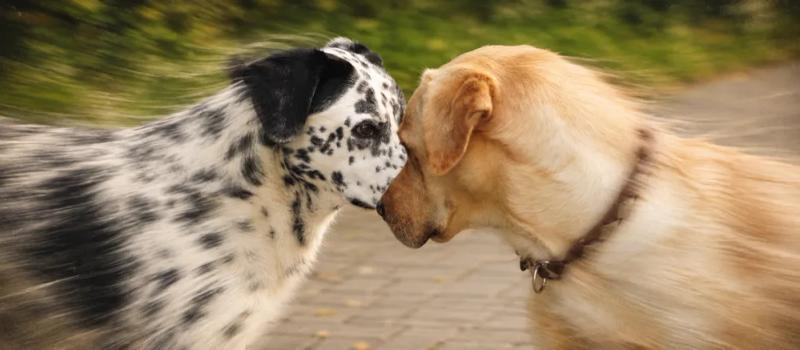
During proestrus, estrogen production is associated with swelling of the vulva and bloody vaginal discharge. A female dog may attract male dogs while she is not yet receptive to mating. Attraction and receptivity are different observations, even though both belong to the reproductive cycle.
Estrus
Estrus is the stage in which the female is receptive to mating. Her discharge may become straw-coloured, but appearances vary between dogs. Hormonal changes around this stage include declining estrogen and increasing progesterone. Visible changes cannot supply a universal breeding day or a dependable set of safe days.
Diestrus
Diestrus follows estrus. Progesterone increases during this phase whether or not the dog is pregnant. That is why a hormone associated with maintaining pregnancy must not be treated as proof of pregnancy simply because it rises during the cycle. The reproductive system continues through a hormonal phase even when no pregnancy has developed.
Anestrus
Anestrus is the extended period of ovarian inactivity between cycles. It belongs to the cycle just as the more visible stages do. Many domestic dogs experience about two heats a year, but individual and breed variation means that the spacing is not identical for every dog.
The distinction between heat and the whole cycle also matters when someone says that a cycle lasted a certain number of days. They may mean the days when they noticed discharge, the period of receptivity or the interval until the next heat. Those descriptions are not interchangeable. Explain what you observed when sharing the history with a vet.
Mating, fertilisation and pregnancy confirmation
Female dogs ovulate spontaneously. Mating is not required to trigger ovulation. Receptivity, ovulation, fertilisation and confirmed pregnancy therefore describe different events, even when they occur within the same reproductive episode. Keeping those terms separate prevents an observation from becoming a diagnosis.
A vet can assess the cycle using physical findings, hormone testing and vaginal cytology, which examines cells collected from the vagina. Cytology can help identify the stage of the cycle, but it should not be used by itself to time ovulation. A result needs to be interpreted for the question being asked.
After an unintended mating, the first useful step is a veterinary assessment. Share the dates you observed and be clear about anything you did not see. Our article on mating and pregnancy risk covers the difference between a possible mating, the biological timing and pregnancy confirmation.
Pregnancy assessment may involve an examination, ultrasound, relaxin testing or radiographs later in pregnancy. These methods do not all answer the same question at the same stage. The vet chooses how to assess the dog and explains what the findings establish. An account of mating alone cannot replace that assessment.
If pregnancy is confirmed, the conversation changes from whether conception occurred to how the pregnancy will be followed. An estimated birth date is part of that discussion, but it should identify the information on which the estimate rests.
Pregnancy and the approach to birth
Pregnancy lasts roughly two months, averaging about 63 days from ovulation. Mating dates give a less precise estimate because sperm can survive for several days and eggs mature after ovulation. Counting a fixed number of days from the first observed mating can therefore give a misleading impression of certainty.
Veterinary interpretation of the reproductive history and ultrasound findings can help estimate gestational stage. This is different from treating a general average as an exact prediction for one dog. Our guide to pregnancy timing and birth preparation explains how those dates relate to the care plan.
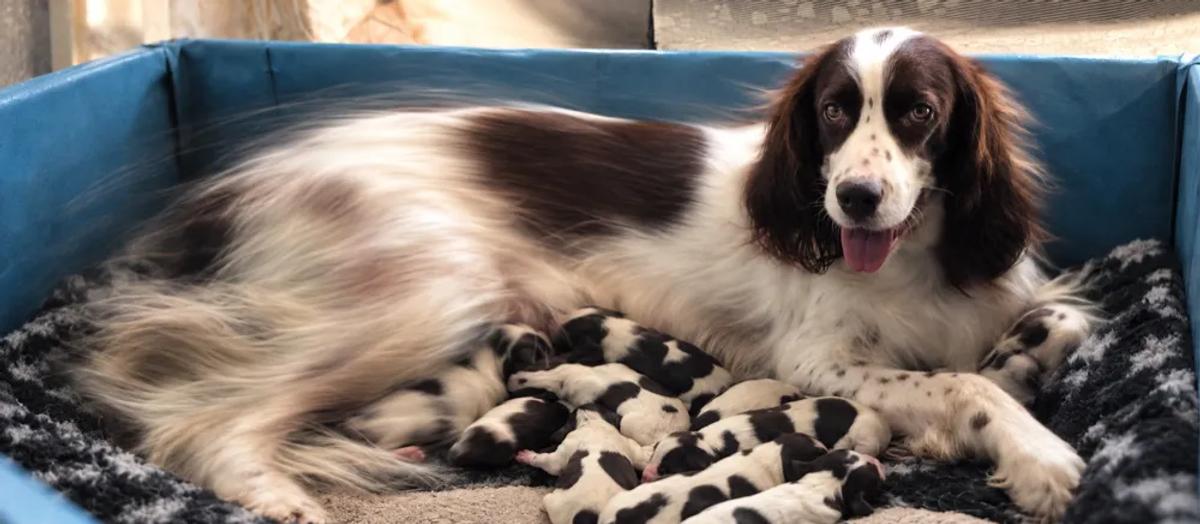
Early and regular veterinary consultation provides a chance to plan pregnancy and labour care. Labour includes dilation of the cervix, delivery of puppies and delivery of placentas. The puppy and placental stages can alternate; they are not necessarily three neatly separated events that happen once and then finish.
Nesting, restlessness and panting can occur as labour begins. Those observations describe possible changes, but they do not establish that the entire process is progressing normally. If your dog is having difficulty giving birth, or you are unsure whether things are progressing as they should, seek veterinary care immediately.
After birth, discharge also needs to be interpreted in context. Discharge that develops a foul smell or increases should prompt veterinary care. It is more useful to report what changed than to rely on a general description of how long another dog had discharge after her litter. The clinic can then assess the concern in relation to this dog and this delivery.

Reproductive illness that needs urgent care
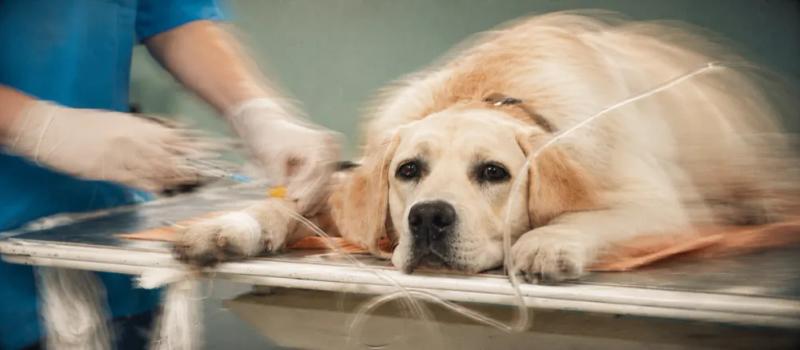
Pyometra is a serious infection in which pus accumulates in the uterus. It can be life-threatening. Signs may include poor appetite, lethargy, vomiting, increased thirst or increased urination. These changes need veterinary investigation; they do not allow a pet parent to diagnose the condition from appearance alone.
The cervix affects how the illness presents. With an open cervix, discharge may leave the uterus and become visible. With a closed cervix, the contents cannot drain in the same way, and abdominal distension may occur. A lack of visible discharge does not rule out pyometra.
Our guide to pyometra signs and urgent care explains that distinction and the veterinary investigation. Suspected pyometra needs prompt care. Removal of the ovaries and uterus is the preferred treatment approach, with the wider treatment plan determined by the dog's condition.
Investigation can include the reproductive history, a physical examination, ultrasound or radiographs, and blood tests. Imaging helps the vet examine the uterus, while laboratory findings add information about the illness. The assessment brings those findings together rather than relying on a single visible symptom.
Supportive care and antimicrobials can form part of treatment. Nonsurgical management is reserved for selected circumstances and requires close monitoring, including attention to possible deterioration and recurrence. It is not a home alternative to having an unwell dog assessed. Serious complications can include sepsis and rupture of the uterus.
A previous reproductive procedure is relevant history, too. Rare disease involving remaining reproductive tissue can occur in particular circumstances. Tell the vet which operation was performed, if you have that information, rather than assuming the word spayed settles every possible explanation for illness.
Discussing future pregnancy prevention
Removing the ovaries prevents ovarian cycling and pregnancy. Ovariohysterectomy removes the ovaries and uterus and also treats uterine disease. The specific operation matters when discussing what it changes, particularly if a pet parent has heard different procedures described using the same everyday term.
The prevention conversation is separate from emergency treatment of an already infected uterus. A general explanation of reproductive benefits does not set the timing of surgery for every dog. Discuss the reason for the operation and the proposed procedure with your vet, using your dog's own history.
The guide to spaying a female dog covers the individual procedure and care discussion. For male dogs, neutering a male dog addresses the male operation separately. These are useful next reads when the immediate question is future pregnancy prevention rather than a current suspected pregnancy.
Keep the named procedure in the medical record. Nuzzy PetLife supports vet-visit history, so the visit details can sit alongside the rest of your dog's care history. For a later appointment, bring the clinic's record of what was done rather than relying only on a remembered description.
Questions about dog reproduction
How does the dog reproductive cycle work?
The cycle moves through proestrus, estrus, diestrus and anestrus under hormonal control. Heat usually refers to proestrus and estrus, when visible reproductive changes and receptivity develop. Diestrus can occur without pregnancy, followed by an extended period of ovarian inactivity.
What do the female reproductive organs do?
The ovaries participate in the hormonal cycle and release eggs at ovulation. Eggs complete maturation in the oviduct, where fertilisation occurs. Early embryos subsequently move into the uterus as pregnancy develops.
What do the male reproductive organs do?
Male reproductive function includes hormonally controlled sperm production and sperm maturation in the epididymis. After ejaculation, sperm may survive for several days in the female reproductive tract. This helps explain why mating and fertilisation need not happen on the same date.
Sources
Cornell Riney Canine Health Center. Dog estrous cycles (2023).
Cornell Riney Canine Health Center. The normal whelping process.
Cornell Riney Canine Health Center. Pyometra.
Canine Pyometra: A Short Review of Current Advances. Animals (2023).
Davidson AP. Management of Reproduction in Dogs. MSD Veterinary Manual (updated June 2026).