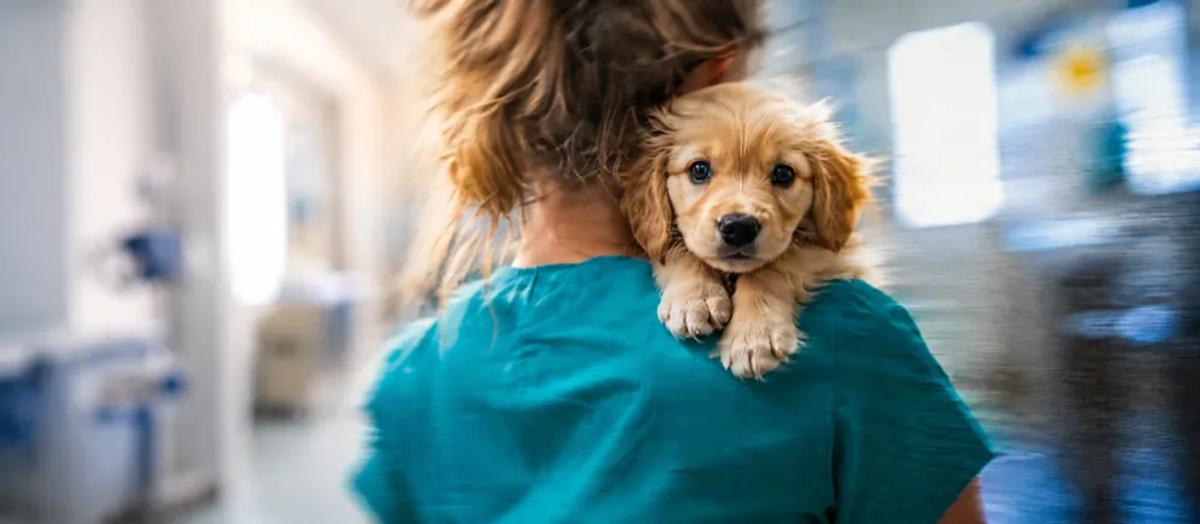
A puppy in India starts its core vaccines at around six to eight weeks of age, then gets a dose every two to four weeks until it is at least sixteen weeks old. The first rabies shot goes in from about twelve weeks, with a booster a year later. That timeline comes from the WSAVA 2024 guidelines, the framework most Indian vets work from. Below is how the first few months usually run, and the couple of places people slip up.
Why one shot is never enough
New pet parents often expect a single injection to be the end of it. It is not, and there is a good biological reason.
A puppy takes in antibodies from its mother's milk in the first weeks of life. Those borrowed antibodies protect it early on, but they also block a vaccine from taking hold, and they fade at a different age in every puppy. Vaccinate too early and the mother's antibodies can simply cancel the shot out. Leave it too late, though, and there is a dangerous gap once that borrowed immunity fades and before a vaccine has taken its place. The WSAVA answer is a series of doses spaced two to four weeks apart, running until the puppy is sixteen weeks or older, by which point the maternal antibodies have almost always gone and the vaccine can do its job. The last dose in that window is the one that matters most.
The week-by-week schedule
Exact weeks shift a little depending on your vet and the combination product they use, but the shape stays consistent. This is the schedule most Indian vets follow, built on the WSAVA framework.
- 6 to 8 weeks: first core dose, protecting against distemper, canine hepatitis and parvovirus. It is usually given as a combination shot, the DHPPi or DHPPiL injection you will see written on the card.
- 10 to 12 weeks: second core dose.
- From 12 weeks: first rabies vaccination. In many combination schedules this sits alongside the core shots.
- 14 to 16 weeks: final core dose of the puppy series. WSAVA calls the dose at sixteen weeks or older the most important of the lot.
- 6 to 12 months: a booster that closes out the puppy course.
Most vets deworm the puppy alongside these visits, since worms are near-universal in Indian pups. If you are unsure what a "7-in-1" or "9-in-1" on the card actually contains, the breakdown of combination vaccines walks through it.
When can my puppy go outside?
This is the hardest part, because two real needs pull against each other. A puppy needs to meet the world during its socialisation window, which closes early. It also needs to stay clear of disease until its shots have taken. WSAVA suggests waiting about a week or two after the final puppy dose before letting a pup roam freely in public.
In India there is an extra wrinkle. Streets and parks carry unvaccinated dogs and the diseases they spread, so the ground itself is a risk for a half-protected pup. The workable middle path is to socialise without full exposure. Carry your puppy through the neighbourhood so it takes in traffic, people and noise from the safety of your arms, and invite a friend's vaccinated, gentle adult dog over for a calm introduction. What you want to avoid until the series is complete is ground-level contact in stray-heavy streets and public parks. The pillar guide on dog vaccination has the wider picture of what your dog needs beyond the puppy months.
If you adopted an older puppy with no records
Plenty of Indian pet parents take in a rescue or an older pup whose history is a blank. When you cannot prove what a dog has had, the safe assumption is that it has had nothing. Your vet will treat it as unvaccinated and start the core series, making sure a dose lands at sixteen weeks of age or older, with rabies from twelve weeks. It is a small cost for certainty, and far cheaper than treating a disease you assumed was covered.
What to expect after your puppy's shot
Puppies handle their shots well as a rule. Some go a bit subdued for the evening and sleep more than usual, and a smaller appetite the next day is common too. All of it is normal and passes on its own. Let the puppy rest and keep the house calm.
Watch closely, though, in the few hours right after the visit. Facial swelling, hives, repeated vomiting or any breathing difficulty point to an allergic reaction and mean a vet straight away. These reactions are uncommon, but a young pup is small, so do not sit on them. A morning appointment gives you the daylight hours to keep an eye on your puppy after each dose.
Frequently asked questions
When do puppies get their first vaccination?
The first core vaccine is usually given at six to eight weeks of age. The first rabies shot follows from about twelve weeks. If you bought or adopted a puppy that is already older, your vet will start the series at whatever age you begin.
Can I take my unvaccinated puppy outside?
Not into high-risk places like stray-heavy streets or public parks, and not until the vaccine series is done. You can and should still socialise the puppy safely by carrying it, and by arranging meetings with healthy, vaccinated dogs at home.
How many vaccinations does a puppy need in the first year?
Usually a core series of about three doses running until sixteen weeks or older, the first rabies shot, and a booster around six to twelve months. Your vet sets the exact count based on the age you start.
I missed a dose. Do we start again?
Do not panic. Call your vet. Depending on how long the gap was, they will either continue the series or restart it. A short delay is rarely a disaster.
The bottom line
The puppy months are the one time vaccination is genuinely urgent, because a young dog has the least protection and meets the most new things at once. Stick with the series your vet lays out, and be patient about the risky outings until it is finished. Your puppy can still meet the world in the safer ways above in the meantime. A reminder for each dose on Nuzzy's PetLife means none of the six-to-sixteen-week visits slips through in a busy first month.
Sources
- WSAVA 2024 Guidelines for the Vaccination of Dogs and Cats — World Small Animal Veterinary Association.
- National Action Plan for Dog Mediated Rabies Elimination from India by 2030 (NAPRE) — Ministry of Health and Family Welfare, Government of India.