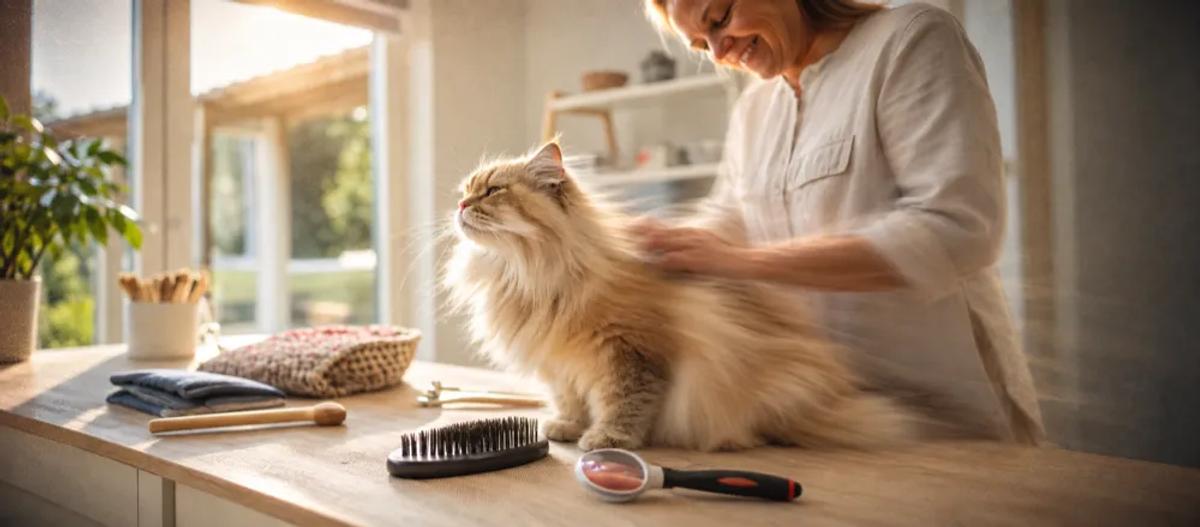
Start grooming while your cat is relaxed, and brush gently in the direction the coat grows. Let your cat leave if grooming becomes stressful. Keep scissors away from mats, and seek professional help for severe matting.
Start with a comfortable cat
Begin when your cat is relaxed. Build tolerance of handling gradually, keeping each session within what the cat finds comfortable. End before discomfort appears.
Watch your cat while you groom. Freezing, tail swishing or growling can signal discomfort. If those signs appear, stop. Don't hold a stressed cat in place to finish the coat.
If grooming becomes a struggle, stop and try a smaller goal when your cat is relaxed again. Choose something they can easily tolerate.
For help understanding what you see during grooming, reading your cat’s body language explains how posture and surroundings fit together.
It can be frustrating to put the brush away with some work unfinished. Let your cat's comfort set the stopping point.
Brush in the direction of the coat
Use gentle strokes that follow the direction the hair grows, working from the head towards the tail.
For a longhaired coat, use a wide-toothed comb to remove dead hair, working from head towards tail and taking extra care around the armpits and between the hind legs.
If you are unsure how to use the comb, ask a professional to demonstrate on the part of the coat you find difficult.
Get help with mats
Do not cut mats out with scissors. Severe matting needs professional attention. Ask a cat groomer or your veterinary team to assess the area.
Describe where the mat is and what you've already tried. Ask whether the groomer can help or whether your cat needs to be seen by the veterinary team.
Decide whether a bath is needed
Most cats do not need regular baths. Speak to your vet about whether your cat needs one.
Ordinary dirt and debris may come away with brushing. If a dry brush isn't enough, try wiping the fur with a soft damp cloth.
Read about bathing a cat for preparation when your vet advises a bath, including the washing instructions to obtain before starting.
Learn nail and ear care separately
Nail clipping needs a demonstration
Learn nail clipping from a vet or veterinary technician before trying it at home. Ask them to demonstrate with your cat and explain anything you cannot see clearly.
The guide to cutting cat nails helps you prepare for the demonstration and follow the explanation of the claw and quick.
Ask about the need for ear cleaning
Ask your vet which ear product to use and how often cleaning is needed. Excessive cleaning can damage the ear.
Redness, discharge, odour, head shaking or ear scratching are reasons to seek veterinary assessment. Describe the change rather than deciding for yourself that it identifies a particular condition.
Read about cleaning cat ears for the limited visible-flap care to discuss with your vet.
Know when hairballs need attention
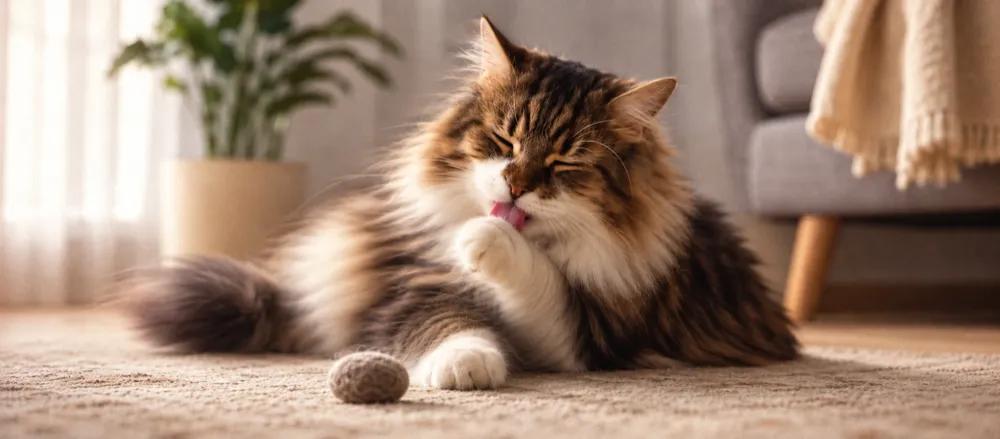
Cats swallow loose hair while grooming themselves.
Repeated unproductive retching or vomiting, or lethargy, warrants veterinary examination without delay. Contact your vet about those signs.
The article on hairballs in cats explains more about swallowed hair and the reasons to seek assessment.
Questions about grooming a cat
How do I brush a cat?
Begin with a relaxed cat and brush gently from head towards tail, following the direction the coat grows. Let your cat leave if the experience is stressful.
Do cats need baths?
Most cats do not need regular baths. Ask your vet whether a bath is needed for your cat.
Arrange help with grooming
Use Nuzzy PetMap to look for grooming businesses. Before arranging a visit, ask whether they handle cats and explain which task you need help with.
Sources
How to clip a cat’s nails, WSU Veterinary Teaching Hospital
The danger of hairballs, Cornell Feline Health Center
Should I bathe my cat?, Cats Protection
Grooming your cat, International Cat Care
Examining and medicating a cat’s ears, WSU Veterinary Teaching Hospital