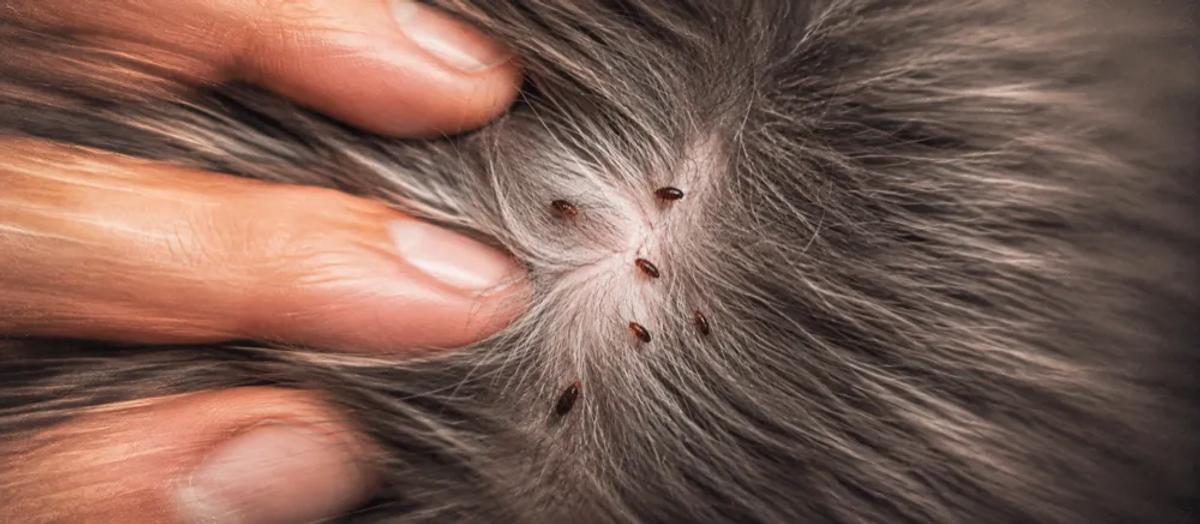
Cats get Dipylidium, often called the flea tapeworm, by swallowing an infected flea or louse during grooming. Treatment needs appropriate flea control as well as the prescribed worm treatment; where fleas are rare, louse treatment may be relevant. Without that control, reinfection is likely. Seed-like segments can be a clue, but the vet needs to assess what you've seen. This page covers Dipylidium specifically. [1, 2]
For the broader picture of prevention and testing, the cat deworming guide connects those decisions.
How flea tapeworm infection happens
The route is ingestion: a cat swallows an infected flea or louse during normal grooming. A flea bite itself is not the route described for Dipylidium. The flea or louse is an intermediate host, meaning it carries a stage of the parasite that reaches the cat when swallowed. [1]
That detail changes the treatment conversation. Ask how the prescribed worm treatment and flea control fit together. The relevant guidance also allows for louse treatment in areas where fleas are rare. Your vet can decide what applies to your cat. [1]
If the clinic has already identified the parasite, retain the name from that record. If it hasn't, describe the observation without deciding the species yourself.
What segments can look like
Dipylidium segments can be visible in an infected cat's poo and are described as resembling cucumber seeds. Broader descriptions of feline tapeworm segments compare fresh ones with rice grains that stretch and contract, and dried ones with sesame seeds. They can be seen near the cat's tail or in the poo. [1, 2]
These are descriptive comparisons. They do not turn a visual match into a confirmed infection. Tell the vet where the material appeared and whether you saw it fresh or dry.
A segment observation is also different from a wider account of illness. If your concern includes other changes, describe those separately. The guide to other worm-related signs covers that broader question, including the observations associated with other worm groups.
Why a sample can miss Dipylidium
A negative faecal flotation sample may miss Dipylidium infection. This is a limit of what that sample and method can detect. It does not mean the observation you made has been explained, or that every diagnostic test has the same limitation. [1, 3]
A 2015 study gives a specific example. Researchers examined the intestinal tracts of 116 adult cats from an animal-control shelter in northeastern Oklahoma. Forty cats had Dipylidium caninum infection. Centrifugal faecal flotation using a sugar solution detected none of those 40 infections. [3]
Those were the cats and the method studied. The result is not an estimate of infection in Indian households, and it does not establish that every test will miss every infected cat. It helps explain why a negative flotation result and a continuing concern about segments can belong in the same veterinary conversation.
Keep the test report with your observations and ask the clinic what the result can establish.
Treatment and reinfection
Gastrointestinal parasite treatment often involves medicine prescribed by a veterinarian. Follow the instructions provided for that prescription. [2]
For Dipylidium, appropriate flea control must accompany treatment, with the louse-control alternative where applicable. Otherwise, reinfection is likely. The parasite treatment and intermediate-host control therefore need to be discussed together. [1, 2]
Ask which instructions cover the worm treatment and which cover flea or louse control. If the prescription or clinic message is unclear, ask for clarification before turning it into your own schedule.
If you notice segments again, record that observation and contact the vet about it. The original instructions and the new observation are what you have to discuss.
Keeping follow-up information
A short follow-up note can contain the date, the observation and the question for the clinic. Keep the actual prescription with it. Where more than one family member helps with care, agree who records each completed action.
Nuzzy's PetLife includes vet-visit history, and PetID links medical documents to a digital pet identity. Those records can keep the clinic's advice attached to your cat's history. Ask the vet which follow-up date applies, then record that date in the place your household already checks.
Questions about flea tapeworms
How do cats get flea tapeworms?
Cats acquire Dipylidium by swallowing an infected flea or louse during grooming. The route is ingestion of that intermediate host, rather than the flea bite itself. This explanation is specific to Dipylidium. [1]
What does flea tapeworm treatment involve?
Follow the vet's prescribed treatment and instructions. Dipylidium treatment must be combined with appropriate flea control, or louse treatment where fleas are rare; without that control, reinfection is likely. Ask the vet which plan applies to your cat. [1, 2]