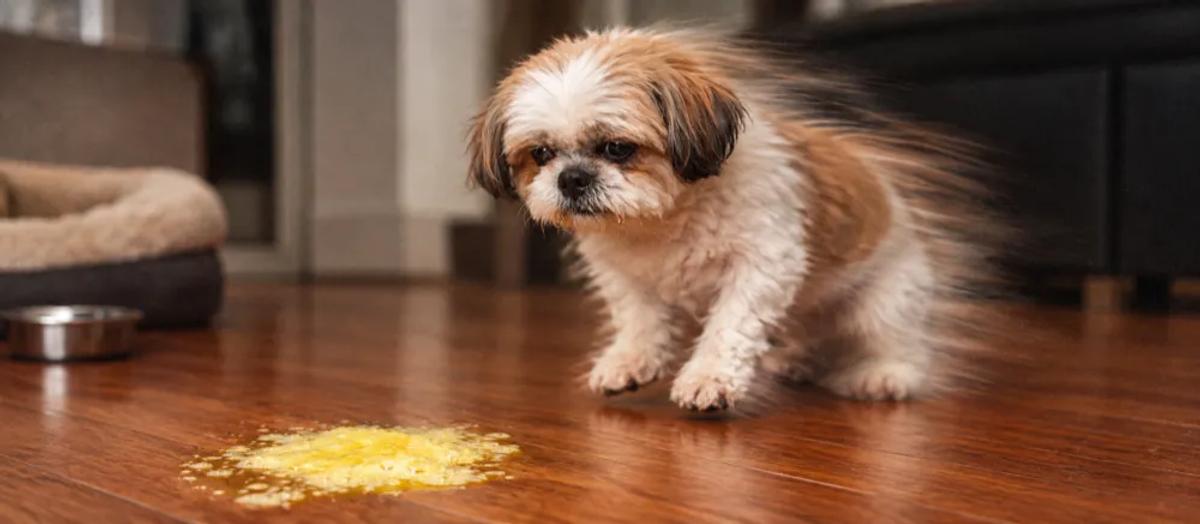
Yellow liquid in dog vomit can be bile. A pattern of vomiting bile or froth after a long gap between meals may fit bilious vomiting syndrome, but a vet needs to rule out other causes. A dog that eats breakfast or wants to play afterwards can still need assessment if the vomiting keeps returning.
If your dog repeatedly tries to vomit without bringing anything up, has a swollen abdomen or collapses, seek emergency veterinary care. Difficulty breathing also needs immediate help. You do not need to see all of these signs together.
What yellow liquid can mean
Bilious vomiting syndrome, often shortened to BVS, describes a pattern in which a dog brings up bile or froth after going without food for a long period. For some dogs, that means an episode in the morning after the overnight gap between dinner and breakfast.
The yellow colour is a clue about what came up. It does not establish why it happened. Calling it BVS before an examination skips the part where a vet checks for other explanations, including problems that need different care.
Even if the timing matches, tell your vet whether this was the first episode or something that has been happening repeatedly.
The material may also look frothy. If that is the feature you noticed, our guide to dogs bringing up white foam explains why the movement before the material appears is useful to describe.
Why an apparently normal dog may still need assessment
Your dog might finish breakfast after vomiting, then carry on with the day. That is worth telling the vet, along with the vomiting itself. It does not settle the question of whether a recurring problem needs investigation.
Repetition matters. Vomiting that happens even once a week can indicate disease, so a familiar morning episode should not quietly become part of your dog's routine. Contact your vet when it keeps happening, including when your dog seems comfortable between episodes.
It is tempting to keep trying a different feeding time because the empty-stomach explanation sounds simple. Before making that the plan, have the cause assessed. A feeding adjustment recommended for a dog with diagnosed BVS is a different decision from trying to treat unexplained vomiting.
Signs that need urgent care
Repeated attempts to vomit with nothing coming up can be a sign of gastric dilatation-volvulus, also called GDV or bloat. This condition requires immediate veterinary treatment. Abdominal swelling and collapse are other warning signs; do not wait for a complete set before seeking help.
Breathing difficulty is an emergency too. A dog working hard through the abdomen to breathe, showing a bluish colour around the gums or muzzle, or becoming weak needs prompt emergency care. If possible, call ahead while arranging transport.
Blood in vomit, including material that resembles coffee grounds, needs veterinary attention. Contact your vet about vomiting accompanied by lethargy or a painful belly. Do not use the colour of the liquid to overrule those changes.
What to tell your vet about the episode
Give the vet the sequence, even if you are unsure what to call it. Describe what your dog was doing immediately before anything came up and whether there was retching.
Regurgitation does not involve retching. That distinction can be difficult to describe after the event, so use ordinary words and say what you actually saw. You don't need to arrive with the correct medical term.
A short note can keep the appointment focused:
- Write down when the episode happened and when your dog last ate.
- Say whether it has happened before, including occasions that seemed minor.
- Describe the liquid or food that came up and any retching beforehand.
- Mention how your dog has been behaving, including appetite and any other changes you noticed.
Keep these observations together rather than trying to reconstruct several mornings from memory. If someone else feeds your dog, ask them about the timing too. The aim is an accurate account of your dog's day, without assuming that a particular meal caused the episode.

When meal timing may be part of the plan
If your vet diagnoses BVS, they may recommend changing how meals are distributed. That can include dividing the daily food into smaller meals or adding a late meal to shorten the overnight gap.
More meals should not automatically mean more food. If your vet recommends this approach, ask how to divide the existing daily amount and how to fit the change around your dog's nutritional needs.
Do not copy another pet parent's feeding instructions simply because both dogs brought up yellow liquid.
Ask what improvement to look for and when to contact the clinic again if vomiting continues. You should leave knowing what the vet wants you to change, rather than juggling a feeding suggestion from one website and a different explanation from another.
Frequently asked questions
Why does my dog vomit yellow liquid in the morning?
Bile or froth after the overnight gap between meals can fit bilious vomiting syndrome. Morning timing alone cannot confirm it. A vet should assess recurring vomiting and rule out other causes before recommending a feeding or treatment plan.
Can my dog have a problem if it is still eating and playing?
Yes. Normal behaviour between episodes does not explain recurring vomiting. Tell your vet that your dog is eating and playing, but also describe how often the vomiting happens. Both observations belong in the history.
Should I change its meal times?
Ask your vet first. Meal timing can be part of care for diagnosed BVS, but unexplained vomiting needs assessment. If smaller or later meals are recommended, clarify the portions so the daily food amount stays appropriate for your dog.