Small leg movements during sleep are reported in dogs, but a twitch alone cannot tell you what your dog is dreaming about or rule out a seizure. A paw moving on the bed is an observation that needs context. Contact a vet promptly if you suspect an ongoing seizure; do not wait five minutes before calling.
It is easy to imagine a sleeping dog chasing something when its legs move. The research discussed here records what pet parents saw. It cannot confirm the story we attach to that movement.
Movements reported during sleep
In a 2020 study of young dogs, pet parents reported small twitching movements of the legs during sleep. A 2022 caregiver survey also recorded sleep behaviours associated with REM sleep. Both relied on people's observations at home, which means a reported twitch was not a laboratory confirmation of the sleep stage at that moment.
The observations do not establish that every twitch is harmless, or that every event described as twitching has the same explanation. A description such as “the legs moved” leaves several details of the event unknown.
If you are also wondering about rest across the day, the guide to your dog's sleep pattern covers that broader question. Here the concern is the movement itself and what to tell a vet when you are unsure about an event.
What a twitch tells you about dreams
These caregiver studies cannot establish dream experiences or dream content from twitching. They give us no way to tell whether a moving paw means a dog is dreaming about a person, another animal or something that happened earlier. Calling a movement “chasing” is an interpretation of what it looks like.
A movement cannot establish that your dog is having a nightmare. You can describe the action plainly without deciding what the dog is experiencing internally.
Signs your vet will ask about
Seizures can be generalised or focal. A generalised seizure may involve loss of consciousness and stiffening followed by paddling movements. Drooling, unusual vocalisation or involuntary urination or defecation may also occur. These are possible signs, and they need veterinary interpretation in the context of the event.
A focal seizure can involve repetitive, uncontrolled movements in one muscle group or a smaller part of the body. Consciousness may be preserved. That is why responsiveness alone cannot be used as a home test to rule out a seizure, even when the movement seems limited to one area.
The period afterwards can also matter. A dog may be confused, disoriented or lethargic following a seizure. Those changes are worth describing, but they do not independently establish the cause of an event. Tell your vet what you actually saw before you attach a label to it.
This can be difficult to describe after a frightening moment. Use ordinary words for the movement and explain what your dog did afterwards. You do not have to decide whether the event fits a generalised or focal category before contacting the clinic.
When the event needs urgent care
Call promptly about an ongoing suspected seizure. The 2023 seizure consensus identifies five minutes as the point by which emergency treatment should already have started. It is not a waiting period. If the event is continuing while you are seeking advice, say that clearly to the clinic.
Repeated seizures without recovery of consciousness between them also require emergency care. Recovery between events is therefore a separate detail to report, alongside how long an individual event has lasted. Do not treat a pause in the visible movement as proof that consciousness has recovered.
Multiple seizures within 24 hours need emergency veterinary attention. Do not wait for another event before seeking help.
The priority is getting care. Describing an event as twitching because it began during sleep must not delay that action when you suspect ongoing, prolonged or repeated seizures.
Record what happened
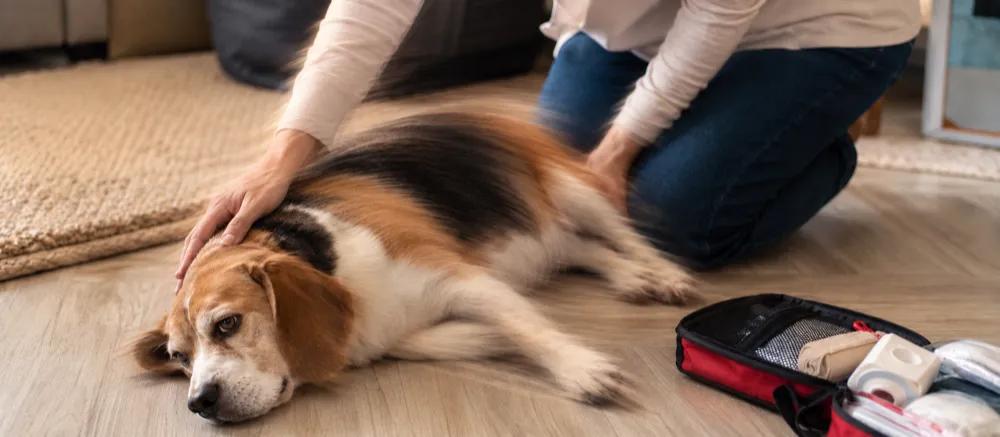
Your vet can use the timing of events, their duration, and a description of behaviour before and afterwards. A video can help if you can obtain it safely without delaying care. If someone is already contacting the clinic, keep that call and the arrangements for care moving.
For dogs already being monitored for seizures, these records help the vet follow what happens between appointments. Keep the account factual, including the details you could not see clearly. Do not deliberately trigger another event to get a better recording.
PetMap can help you find a veterinary clinic for routine follow-up. An urgent event needs direct veterinary contact, without delaying care to browse listings.
Frequently asked questions
Is my dog twitching in sleep or having a seizure?
Small movements are reported during sleep, but movement alone cannot diagnose the event. Contact a vet promptly about a suspected ongoing seizure. Prolonged seizures, repeated seizures without recovery and multiple events within 24 hours need emergency attention.
Do dogs dream?
The caregiver studies here cannot establish dream experiences or content. They record observed sleep behaviours associated with REM sleep, which does not tell us what a dog is dreaming about when its legs twitch.
Sources
- Kinsman et al. (2020), Animals: Sleep duration and behaviours in dogs up to 12 months of age
- Tooley and Heath (2022), Animals: Sleep characteristics in dogs; effect on caregiver-reported problem behaviours
- Charalambous et al. (2023), Journal of Veterinary Internal Medicine: ACVIM consensus statement on status epilepticus and cluster seizures in dogs and cats
- Cornell Riney Canine Health Center: Idiopathic epilepsy in dogs