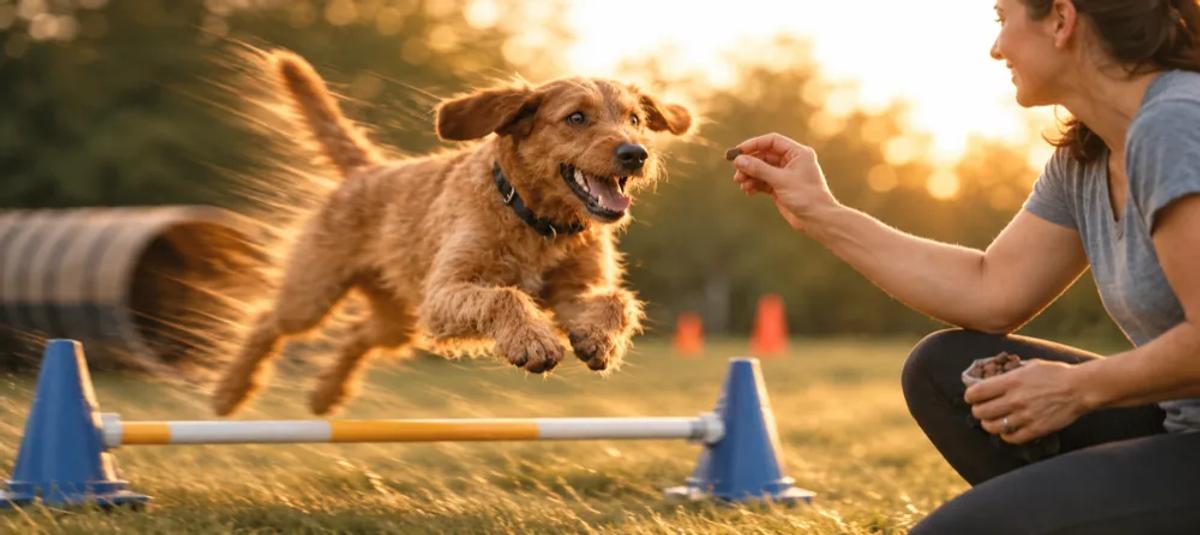
Dog exercise starts with a plan for the dog in front of you. Give walks room for safe sniffing and exploration, add activities your dog enjoys at home, and discuss individual physical activity with your vet. A lead by the door and a food-search game can serve different parts of that plan. The useful question is what your dog can comfortably do and enjoys doing.
Discuss exercise needs and mental engagement with your vet for a young or mature adult dog. Bring the questions that apply to your own routine. Enrichment choices also need to reflect a dog's age, preferred play and medical needs, from puppyhood through the senior years.
Plan around your dog
Discuss your dog’s needs
Start with what already happens. Tell your vet about the outings your dog takes, the activities available at home and anything that makes the routine difficult. A description of the actual day gives you something concrete to discuss when deciding what to keep or change. You don't need to arrive with an exercise programme worked out in advance.
Keep physical activity and enrichment in the same conversation. Walking is one opportunity for activity, while sniffing and learning add ways for a dog to use their attention. Ask which choices suit your dog's individual needs. For a dog with a medical condition, take questions about physical activity to the veterinary team that knows their care.
An exercise plan also has to be practical for the people carrying it out. If different family members take the dog out, agree on the plan together. One person might handle the morning outing while another sets up an indoor game. That is a household arrangement, and it can be changed when work or other commitments change.
Consider preferences and practical limits
Pay attention to what your dog chooses when there is a safe choice. A dog may spend part of an outing sniffing one patch instead of moving steadily along the route. You can allow that exploration without treating the walk as unfinished. The distance on your phone does not describe everything the dog did outside.
Choose activities around the individual dog rather than filling a timetable with every game you have seen. You might start by considering an existing walk and one activity at home, then discuss whether those choices fit. Ask whether the walk and activity need adapting for your dog before treating them as an agreed daily routine.
Keep the observations specific. Saying that your dog stopped repeatedly on a familiar walk is more useful than deciding they have become lazy. It describes what happened without guessing at the cause. Bring a change that concerns you to your vet when reviewing the activity plan.
Make walks useful
Allow time to explore
A walk can include unrushed sniffing. When the surroundings are safe, you can also allow your dog some choice about where to go. You are still responsible for the outing, but you can leave room for the dog to investigate instead of moving them on every time their nose goes down.
For example, imagine reaching a quiet stretch where either direction would fit the route you have checked. Allowing your dog to choose between them is a simple way to include choice. That example depends on both options being suitable. It does not mean following the dog into traffic, through a closed entrance or towards an interaction you cannot manage.
Watch how your dog handles the outing itself. The opportunity to sniff can be useful even when a dog cannot participate in a long walk. Avoid using another dog's pace as the standard for yours. Our guide to planning everyday dog walks covers the practical preparation and choices involved.
Keep control on outings
Discuss suitable control with your veterinary team, including the lead and any walking equipment you use. Explain where you walk and what happens there. The arrangement needs to suit the outing and the dog; a photograph of someone else's equipment cannot answer that individual question.
Before leaving, make sure the person taking the dog out knows the plan. In a shared household, that could mean agreeing which entrance to use and who will hold the lead. Keep questions about equipment or a behaviour concern for the professional who is advising you.
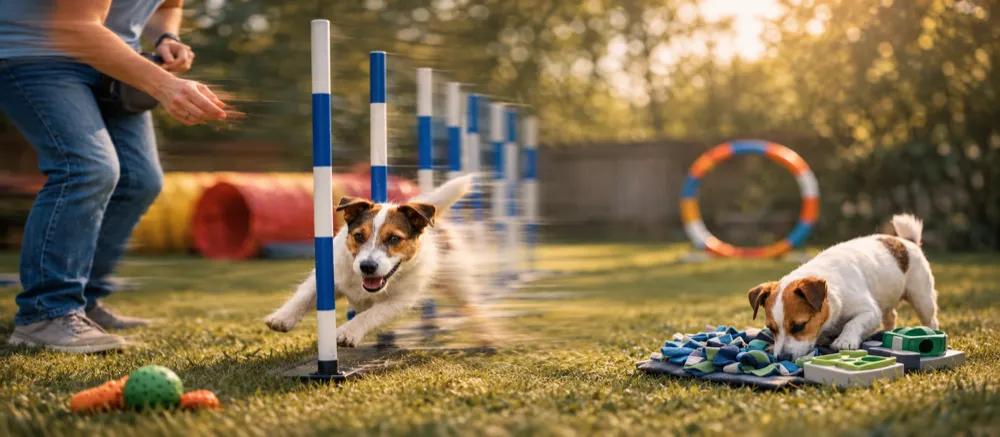
Add learning to the routine
Reward the behaviour you want
Reward-based learning is another form of enrichment. Practising a behaviour such as sit, down or stay gives you something specific to work on with your dog. Use a behaviour you know how to teach, and reward the response you want. You do not need to turn each opportunity into a long lesson.
If you are unsure what to reward, get someone qualified to demonstrate the exercise. It helps to be able to describe the action plainly: the dog sat, returned to you or walked beside you. That keeps the practice focused on an observable behaviour, rather than a broad demand to be good.
Walking on a loose lead is one practical example. Reward your dog for walking beside you. If pulling starts, stopping or changing direction until the dog returns are methods used in loose-lead training. Keep the handling gentle. Changing direction must not become a jerk on the lead.
The guide to leash training for dogs explains that method in more detail, including when to ask for coaching. A walk where pulling needs work can be discussed as a training task within the wider activity plan. It does not need to become a test of how far you can get.
Use reward-focused methods and avoid aversive corrections. In a study comparing dogs attending different training schools, dogs in the aversive group showed more stress-related behaviour during training. The study could not establish a causal relationship, and it did not compare how effectively the methods taught a skill. It supplies no deadline for learning to walk on a loose lead.
Adjust outdoor plans for heat
Check the conditions before an outing. Plan for cooler parts of the day, with shade and opportunities for water, and avoid strenuous exercise in heat or high humidity. Early morning or evening may be options, but the clock alone cannot establish that the conditions suit your dog.
Walking deserves attention in this decision. A UK study of heat-related illness recorded walking among exercise triggers. That finding does not tell you the chance of illness on a particular walk in India. It does establish that a walk belongs in the conversation about heat exposure and activity.
If you are concerned that your dog is overheating, stop the outing, move into a cooler place and contact a vet for urgent guidance. Excessive panting can occur with heat-related illness. Difficulty breathing after heat or exertion needs urgent veterinary assessment. Do not wait for the outing to finish before getting help.
Our guide to walking dogs in hot weather covers these decisions. Use it when considering how the conditions affect your planned outing, then take questions about your dog’s individual activity needs to your vet.
Include indoor enrichment
A food search is a simple activity to try while you are home. Begin by letting your dog see where you place the food, then let them search for it. As the dog learns the game, you can make the search more challenging. The starting point can be easy enough that the dog knows what the activity involves.
You could, for example, begin with visible food placements in a familiar part of the room. After the dog understands the search, consider a more demanding placement. Let your dog’s progress guide the change. You can keep using the food-search activity without adding a household object or changing the food you offer.
Stay with your dog while they use an enrichment toy. Supervision is especially relevant if they have a history of eating inappropriate objects. A toy that is sold for dogs still needs to be considered for your dog. There is no need to collect a cupboard of puzzles before you have watched how one activity goes.
Learning can sit alongside the search game. Choose something your dog can take part in, using their preferences and individual needs to guide the choice. The same list of activities does not have to work for a puppy and a senior dog. Ask for help tailoring the physical part if their health needs make the decision difficult.
The indoor games for dogs guide gives more detail on food searches, supervised toys and reward-based practice. These activities offer choices for the time you spend at home. They do not establish that all outdoor activity can be replaced by an indoor game.
Agree on a manageable next step
Choose a part of the routine you want to discuss or make more practical. Perhaps the current route is awkward for the person who takes the dog out, or you would like an indoor activity for days when outdoor plans change. Start with the actual obstacle instead of drawing up an ambitious new schedule.
If the next step is finding somewhere to go, PetMap can help you discover pet-friendly places. Check access details with the place directly and consider whether it suits the outing you are planning. A listing helps with discovery; the decision about your dog's activity remains individual.
Bring the resulting questions to your veterinary team. You can describe what your dog enjoys, how the current outings go and what you want to change. Agree on a plan the household can carry out, with room to revisit it when your dog's needs or the circumstances change.
Frequently asked questions
How much exercise does a dog need?
Discuss physical activity for your individual dog with your veterinary team. For young and mature adults, that discussion should include exercise needs and mental engagement; enrichment choices across ages also depend on the dog. Ask for advice that fits your dog’s current routine and health needs.
How does mental stimulation fit into dog exercise?
Safe exploration and reward-based learning provide enrichment within the wider activity plan. A walk can include time to sniff, and a familiar behaviour can be practised at home. Choose activities your dog can participate in and enjoys, alongside the physical activity agreed for their needs.
Sources
- 2019 AAHA Canine Life Stage Guidelines. Creevy and colleagues.
- Canine enrichment ideas. Aly Cohen, Cornell Riney Canine Health Center, 2023.
- Changing behaviors. 2015 AAHA Canine and Feline Behavior Management Guidelines.
- Make it stop: unruly behaviors. E’Lise Christensen, AAHA conference proceedings, undated.
- Does training method matter? Evidence for the negative impact of aversive-based methods on companion dog welfare. Vieira de Castro and colleagues, PLOS ONE, 2020.
- Summer heat safety tips for dogs. Cornell Riney Canine Health Center.
- Dogs Don’t Die Just in Hot Cars: exertional heat-related illness in UK dogs. Hall, Carter and O’Neill, Animals, 2020.
- Evaluation and validation of a revised VetCompass clinical grading tool for heat-related illness in dogs. Beard and colleagues, Scientific Reports, 2026.