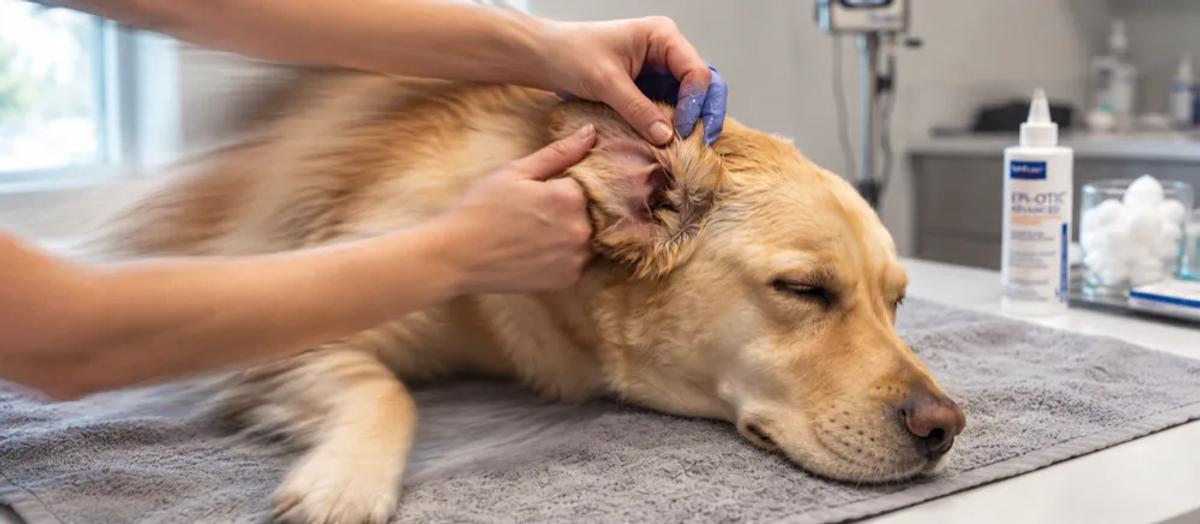
Head shaking, a sore-looking ear, discharge or an unpleasant smell can prompt concern about a dog ear infection. Those signs need assessment, but they do not identify the cause or a particular organism. Allergic inflammation of the external ear can occur with a secondary infection, and the examination needs to distinguish those findings.
A useful appointment answers more than which drops to use. It explains what is happening in the ear now, what may have started it and what needs reviewing if the problem returns. This guide covers the external ear.
What ear signs can tell you
Signs can include scratching at the ears, head shaking, redness, increased wax, discharge or discomfort when the ear is touched. Describe which signs you have noticed and whether one ear or both seem affected. The vet needs that account alongside the examination.
Colour and smell do not give you an organism's identity. A sample examination is a different kind of evidence from noticing discharge, even when the appearance seems familiar from a previous episode. Keep the earlier report available, but let the current assessment establish what is present now.
The distinction between inflammation and infection also matters. Allergic external-ear inflammation can have a secondary infection alongside it. Calling every inflamed ear “infected” can skip the question of what the examination and sample actually show.
You don't need to force an inspection to provide a useful history. Tell the clinic about discomfort and explain what you were able to observe. If an attempted cleaning causes pain, stop and consult the vet. Pushing through the attempt does not supply the missing diagnosis.
What an ear examination checks
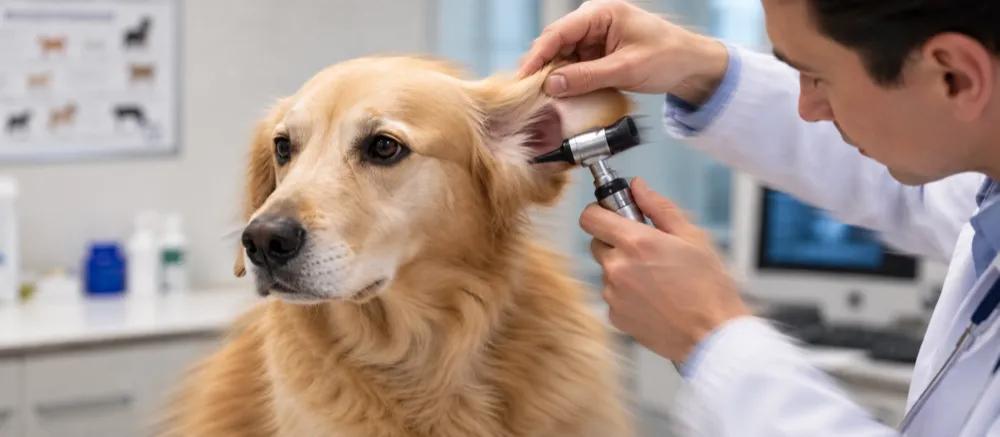
The assessment can include examination of the area around the ear, the ear flap and the canal. A vet may use an otoscope to look into the canal. Explain any previous episodes and bring the names of earlier ear medicines or cleaners so the discussion is based on the actual history.
Ear cytology is part of the veterinary evaluation of otitis externa, the term used for inflammation of the external ear canal. It involves examining collected material under a microscope. Ask what the sample showed and how that finding relates to the inflammation seen during the examination.
These parts of the assessment answer different questions. The examination describes the ear and its condition. The sample adds information about the material collected. Neither should be replaced by a guess based on the smell or by assuming that the last treatment must be suitable again.
The condition of the eardrum also affects veterinary decisions about medicines and cleaning solutions. Debris deep in the canal can make it difficult to assess the eardrum. This is one reason the choice of what goes into an affected ear belongs with the veterinarian examining it.
Ask the clinic to explain what could be assessed and what remains unclear. If a treatment or cleaning plan is given, you should know which ear it applies to and what the vet wants reviewed. These are practical questions about following an individual plan; they do not require you to inspect the eardrum yourself.
Why the problem can return
Recurring external-ear problems need a discussion of the underlying cause. Identifying and treating a secondary infection can be part of the care, while the original reason for the inflammation still needs attention. Allergy is one possibility; other primary causes can include parasites or a foreign body.
When allergy is being considered, atopic dermatitis assessment explains why that diagnosis depends on a broader clinical work-up. It is not established by an ear complaint alone. Tell the vet about skin concerns elsewhere and bring them into the wider skin-health assessment where relevant.
Ear shape has also been studied in relation to external-ear disease. A UK study using veterinary records from 2016 found associations between ear carriage and otitis externa. Those are findings from that population, not proof that a particular dog's ear shape caused its current problem, and not Indian prevalence estimates.
For the individual dog, the useful question is what the current assessment identifies. An association cannot select an ear medicine or replace a search for an underlying cause. If episodes keep returning, ask which part of the investigation addresses recurrence and which part addresses the findings from this visit.
Home care after assessment
Home care should follow the plan for the examined ear. If cleaning is advised, ask the clinic to demonstrate it and explain the cleaner, frequency and stopping instructions for your dog. A routine intended for an unaffected ear should not be copied automatically into an uncomfortable one.
The guide to when ear cleaning is appropriate covers that topic separately. For an infected ear, the vet can select an appropriate cleaner. Avoid products containing alcohol or hydrogen peroxide, and avoid cotton swabs inside the canal because they can push debris deeper.
Pain is a reason to stop. If your dog seems painful during cleaning, consult the vet rather than trying to finish the procedure. Explain what happened so the clinic can advise on the next step for that ear.
Keep the written instructions beside the prescribed product. Check an unclear instruction with the clinic instead of guessing from the packaging or borrowing the routine used for another dog. If the plan is difficult to carry out, say which part is causing difficulty.
For pet parents looking for a clinic, Nuzzy's PetMap includes vet-clinic discovery. The clinician who examines the ear can then explain what care belongs at home and what needs reassessment. Keep the next review's purpose with the instructions, so improvement in appearance is discussed alongside the findings the vet wants to check.
Frequently asked questions
Can I treat a dog ear infection without a vet?
Ear signs do not identify the cause, and external-ear inflammation can have secondary infection alongside it. Examination and cytology help establish what is present, while the eardrum's condition affects choices about ear medicines and cleaning solutions. Arrange an assessment rather than selecting drops from the colour or smell of discharge. Bring any earlier reports and treatment names to that appointment.
How can I care for a dog ear infection at home?
Follow the plan given after assessment, including cleaning only as instructed and using the product selected for your dog's ear. Avoid cotton swabs inside the canal and products containing alcohol or hydrogen peroxide. If cleaning appears painful, stop and contact the vet. Ask for a demonstration or clearer instructions if you cannot carry out the plan comfortably, rather than substituting a different routine.
Sources
AAHA, Management of Allergic Skin Diseases in Dogs and Cats Guidelines (2023)
Cornell Riney Canine Health Center, How to clean your dog's ears (updated 2025)