Bad breath in dogs can accompany gum inflammation and is a reason to contact your vet about an examination. Notice whether it comes with bleeding, changes in eating or other mouth concerns, but don't try to identify the cause from the smell alone. Tell the clinic what has changed when you arrange the visit.
The broader guide to dog dental care in India explains the relationship between home care and professional assessment. You can use it when preparing questions about the care your vet proposes after examining your dog.
What bad breath can tell you
Plaque is a bacterial film involved in periodontal disease, and gum inflammation can produce bad breath. The explanation of periodontal disease describes how plaque affects the gums and supporting tissues. Odour can therefore be part of a mouth problem that needs assessment, even though it doesn't tell you which tissues are affected.
Even the visible amount of tartar gives an incomplete picture of gum health. Your vet needs to examine the mouth and decide what further investigation is appropriate. If you have noticed a deposit on a tooth, mention it along with the smell without trying to decide how severe the disease is.
Keep the description specific. You can tell the clinic when you first noticed the odour, whether it seems different from before and what else has changed. You don't need to arrive with a disease name or a guess about which tooth is involved.
Changes to notice
Watch for changes you can describe without forcing an examination at home. Altered eating behaviour, chewing on one side and dropping food can accompany dental pain. The symptom guide also lists difficulty eating, mouth bleeding and drooling as reasons to contact the vet. Describe the changes when you call, so the team can advise you about arranging an assessment.
If other people share your dog's care, ask whether they have noticed anything different at meals or during handling. Write down what each person saw. You can take those observations to the appointment even if you are unsure how they relate to the odour.
Dogs can continue eating despite dental pain. Mention normal appetite at the visit while still asking the vet to investigate the bad breath.
Bleeding from the mouth also warrants contacting the clinic, and gum bleeding and swelling can accompany inflammation. Explain when you noticed the bleeding and any other change you can describe. You don't need to touch the gums to try to reproduce it for the vet.
At the vet visit
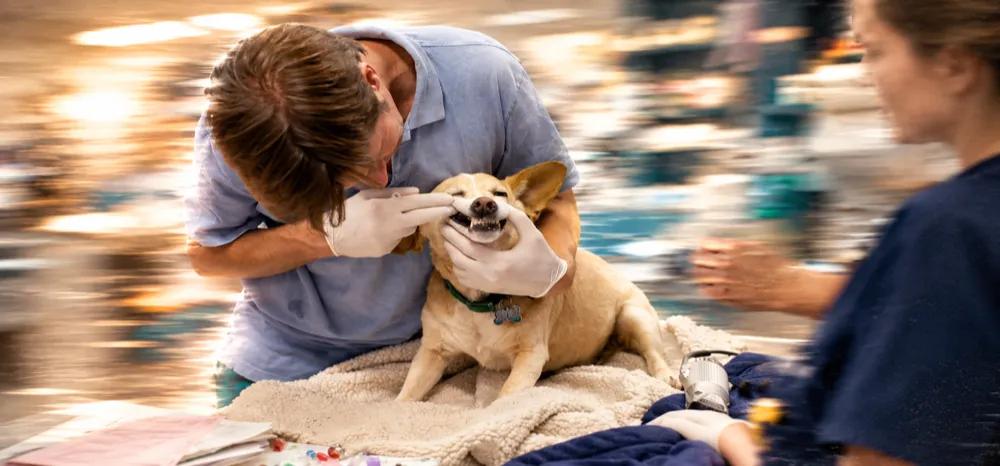
Expect a conversation about your dog's history and an examination. History and physical examination inform treatment planning, as the description of a dental appointment explains. Bring the information the clinic requests, including details of previous dental care and relevant health history. If you have older procedure notes, ask whether the team would like to see them.
An awake look has limits. A thorough dental examination requires general anaesthesia, which allows the team to examine the whole mouth. Ask the vet to explain what the initial examination shows and what needs a more detailed assessment, so you understand why a further procedure is being proposed.
If a dental procedure is proposed, ask about the individual anaesthetic assessment, airway protection and monitoring. Explain any concern you have about anaesthesia and ask how your dog's health affects the plan. Get the preparation instructions from the treating team before the procedure.
Dental imaging helps investigate areas of concern and guide treatment planning. The guidance recommends radiographs of abnormal areas when available and discusses full-mouth imaging, while the professional-care overview includes X-rays in a thorough dental examination. Ask the clinic about its imaging arrangements and what is included in the proposed appointment.
The guide to dog teeth cleaning at the vet explains these steps in more detail. You can use it to prepare questions about examination under anaesthesia, cleaning below the gumline and the instructions you will receive afterwards.
Home care while you seek advice
Ask the vet what home care is appropriate before the examination. Brushing is the most effective home method of plaque control, supported by the home-care advice. But an inflamed or painful mouth may make brushing uncomfortable, so describe any difficulty before trying to continue the routine.
Forcing home care can be counterproductive, and brushing can add to existing gum discomfort. If your dog resists or appears uncomfortable, stop the attempt and ask the vet how to proceed.
If you're looking for a home remedy, tell the vet what you are considering and ask whether it belongs in your dog's care plan. Be specific about anything you have already tried. Ask what you can do while the examination is being arranged and which changes to report to the clinic.
After professional care, follow the treating vet's instructions about restarting home dental care. Home care remains part of periodontal management, but the instructions should relate to the treatment your dog received. Ask for a written plan and the clinic's contact details before you leave.
Common questions
Can bad breath be a sign of illness?
Bad breath can accompany gum inflammation, and the symptom guide advises contacting a vet when you notice it. A veterinary examination is needed to investigate the cause. Describe the smell and any other changes, without trying to name the condition from the odour alone.
Can a home remedy help my dog's bad breath?
Ask your vet what home care is appropriate while the bad breath is being investigated. Brushing helps control plaque, and home-care advice places it within the dental-care plan. If the mouth is painful or inflamed, seek advice before persisting with brushing. Tell the vet about any remedy you are considering and ask what is appropriate for your dog.
Arrange an examination
Use PetMap to find a vet clinic, and ask the clinic about an examination for your dog's mouth. Keep the dog dental care guide handy when preparing questions about the plan that follows.