
Cat neutering commonly means removing a male cat's testicles, also called castration. The vet assesses the cat before the operation and plans the clinical care around his needs. If you are caring for a female, our guide to spaying a female cat explains her different procedure.
The broader guide to spaying and neutering explained compares the terms and the distinction between removing gonads and preserving them during sterilization.
What neutering involves
In a usual male-cat castration, the testes are removed. Orchiectomy is the medical term you may see on the operation record. It means removal of the testes.
It helps to distinguish the procedure from a female cat's spay. A female procedure involves the ovaries, sometimes with uterine tissue. A male cat's castration involves the testes. Using the right description makes it easier to understand which advice applies to your pet, particularly when you have cats of both sexes at home.
Sterilization is a broader idea than gonad removal. Some procedures preserve hormone-producing organs. In a vasectomy, the tubes that carry sperm are involved while the testes remain, which gives it a different hormonal meaning from castration. Understanding that distinction does not establish that it is the right option for your cat or available at a particular clinic.
Ask the vet to name the proposed procedure and explain what it changes. This is more informative than relying on the word fixed, which does not identify the operation. The exact name also gives you a clear description to retain with the medical record.
When to discuss the procedure
Discuss neutering during early veterinary visits, rather than waiting until you have selected a surgery date from a general age chart. Clinical guidance describes gonadectomy at 3 to 4 months as an option for cats in good health and vaccinated. The health and vaccination conditions are part of that guidance, not details to drop when repeating the age range.
Your vet needs to assess the individual cat. A number of months on its own does not establish fitness for anaesthesia or provide the rest of the surgical plan. Ask how the recommendation applies to your kitten and what the clinic needs to assess before proceeding.
An age range gives you a reason to start the conversation early. It doesn’t clear your kitten for surgery. The vet still needs to consider the health and vaccination conditions behind that recommendation.
If your cat is already older than the range you have read, bring his current history to the vet rather than trying to reinterpret a kitten recommendation by yourself. The preoperative assessment still concerns the cat in front of the clinician. Explain what is known about his health and previous veterinary care so the discussion starts from his circumstances.
Marking and other expectations
Urine marking may continue after gonadectomy. Reproductive hormones are one trigger, but they are not the only trigger, so removal of the testes does not guarantee that the behaviour will disappear. This qualification matters when marking is the main reason a pet parent is considering surgery.
Tell the vet what you have observed instead of describing neutering as a promised solution. An account of when and where the behaviour occurs is a starting point for the conversation. It also avoids interpreting every urinary change as the same behaviour simply because the cat is male.
Another cat may have stopped marking after surgery, but that experience cannot predict the result for yours. Ask how the vet will assess the marking concern alongside the decision about neutering.
The operation removes the testes. Its effect on your cat’s behaviour is harder to predict, so a promise of a different personality would give you the wrong expectation.
Surgery and the first part of recovery
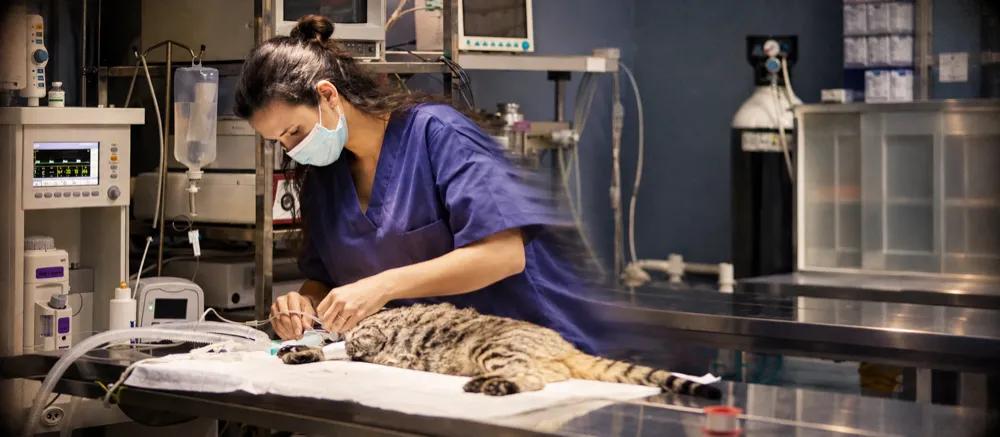
Before the operation, the vet examines your cat and plans his care. General anaesthesia is used, and pain medication forms part of the plan. Surgery and anaesthesia have risks, so the clinic should explain the approach for the individual cat without offering a guarantee that nothing can go wrong.
Pain management starts before surgery, continues during it and extends afterwards. A male cat's operation still requires proper pain care. Ask how pain management will continue after discharge and which instructions you will receive.
At home, keep your cat calm and quiet according to the clinic's plan. Ask the team to explain what it means for his usual routine and how it wants recovery followed up. You do not need to assemble a timetable by averaging different stories about how quickly other cats recovered.
Do not give an over-the-counter pain medicine without veterinary approval. Pain treatment after the procedure belongs in the clinical plan. If you are uncertain about an instruction, clarify it with the clinic instead of choosing another medicine yourself.
Get preparation instructions before the appointment, then review the discharge plan before bringing him home. If other family members will care for him, make the same written directions available to them. Keep the handover practical: who is following the plan, where the instructions are and how to contact the clinic with questions.
Food and body condition
Neutered cats have an increased risk of becoming overweight. Changes in appetite and energy use help explain why this deserves attention: appetite can increase while metabolic rate and energy expenditure decrease. A stronger interest in food therefore does not, by itself, establish that the cat needs a larger daily allowance.
This is a reason for an individual nutrition and activity discussion, rather than an expectation that weight gain is unavoidable. Ask the vet how your cat's body condition will be reviewed and whether the current plan needs adjustment. A universal percentage reduction would not account for the individual animal.
Discuss appetite alongside the amount your cat eats and his body condition. Together, those details give the vet more to work with than appetite alone when reviewing the feeding plan.
Our guide to planning your cat's daily food amount explains how portions, calorie information and body-condition reviews fit together. It provides more detail when the reproductive-care discussion leads to questions about the everyday feeding plan.
Nuzzy PetLife supports weight logs and vet-visit history. Keeping dated measurements gives you a record to bring to the next review, alongside the feeding details you have discussed with the vet. The record can stay brief and still be useful.
Questions about cat neutering
At what age should I discuss neutering my cat?
Raise the question during early veterinary visits. Clinical guidance describes 3 to 4 months as an option for healthy, vaccinated cats, with an individual assessment before surgery. The range is conditional guidance, not automatic clearance for every kitten.
What does neutering a male cat involve?
The usual operation removes the testicles under general anaesthesia after a veterinary assessment. This is called castration or orchiectomy. Female-cat spaying involves different reproductive organs and its own surgical plan.
Sources
WSAVA (2024). Guidelines for the Control of Reproduction in Dogs and Cats: Executive Summary.
Cornell Feline Health Center, Spaying and Neutering