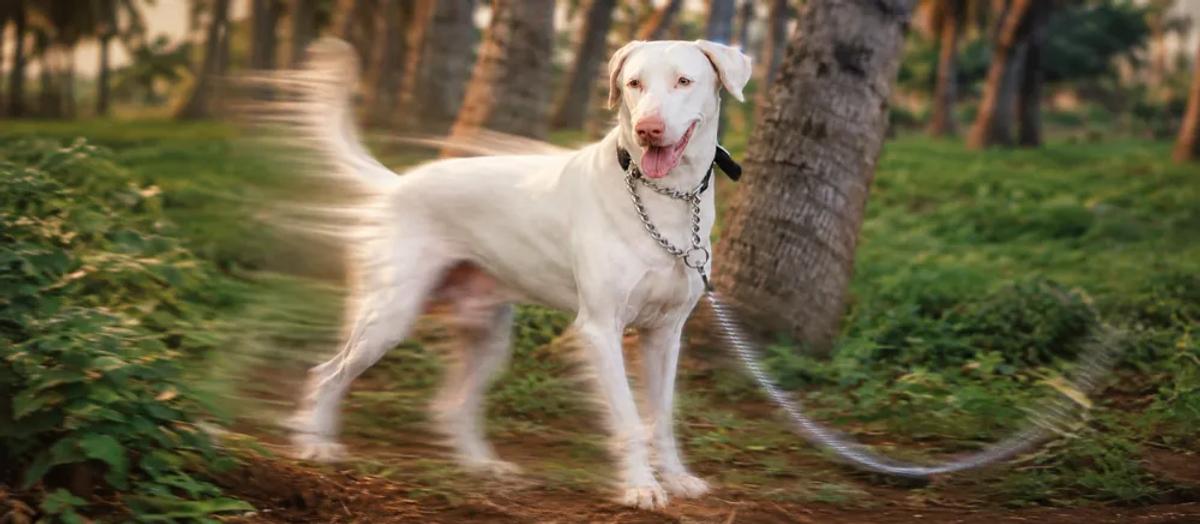
The Rajapalayam dog takes its name from Rajapalayam town in Tamil Nadu. A 2017 field study described predominantly white, short-coated dogs with compact bodies and tucked abdomens. Everyday care means choosing food for your dog's condition and life stage, providing comfortable rest and activity, and using the individual dog's needs to guide the routine. The field description is useful background when you keep its limits in view.
Where the Rajapalayam name comes from
Rajapalayam town is in Virudhunagar district, Tamil Nadu. The breed's name ties it to that place. This geographic connection gives you a documented starting point when reading about the breed.
Rajapalayam also appears in the official Indian dog-breed register checked in September 2026. The Indian dog breeds and their care guide places it alongside the other selected profiles. The current listing and the historical field study answer different questions: one records the breed name in the register, while the other describes the dogs examined in a particular research population.
Coat and size in the field study
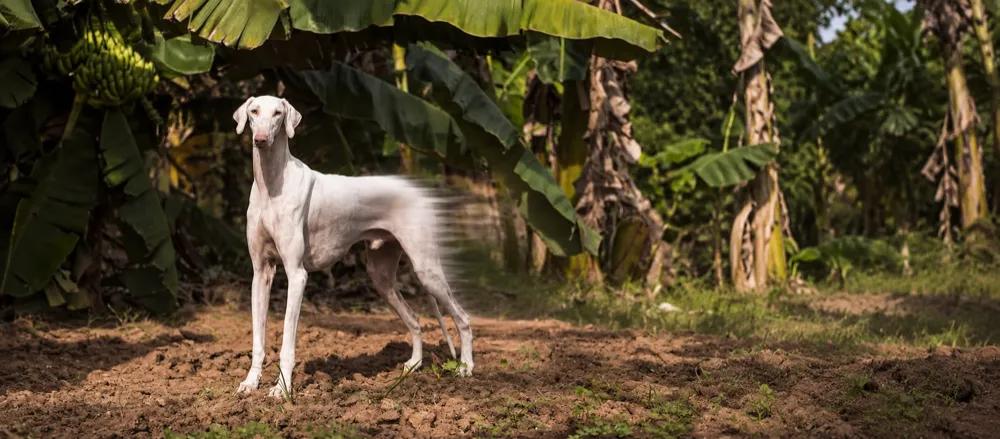
The 2017 study measured 88 adults, including 19 males and 69 females, as well as 21 puppies. Its physical description included short, smooth hair, predominantly white coats, pink skin, compact bodies and tucked abdomens. Researchers also observed a few dogs with small, light brown patches. The observed coats varied.
Adult males in that sample averaged 63.10 cm at the withers, while adult females averaged 58.91 cm. These are separate means for the measured adult groups. They are not the lower and upper ends of a single acceptable range, and they do not tell you how tall a puppy should be at a particular age.
Use the description to understand what the researchers observed. It cannot certify the identity of an individual dog from a photograph. Nor does the presence of a particular coat colour establish a health finding. Questions about your own dog's physical condition need an assessment of that dog, without treating the field description as a checklist they must match.
The comparison with Chippiparai coat and build is useful when exploring the two Tamil Nadu profiles. The Chippiparai survey described predominantly fawn coats, with occasional brown or grey, while the Rajapalayam study described predominantly white coats. Both papers report short, smooth hair and tucked abdomens. Neither comparison supplies a health ranking between the breeds.
Assess body condition alongside weight
Choose food around your dog's life stage, physical condition and individual needs. A complete, balanced diet provides the starting point, and the amount needs to fit the animal eating it. Bringing a field-study measurement to the conversation can help explain where a question came from, but it cannot establish the right food allowance.
Weight, body condition and muscle condition provide different information. Body condition concerns fat, while muscle condition concerns muscle mass. The veterinary assessment includes looking and feeling as well as recording weight. A dog's outline in a photograph cannot replace that examination, even when the outline resembles a published breed description.
Ask your vet to explain what they are assessing in your dog and how they will review it over time. The useful distinction is between the number on the scale and the physical condition that goes with it. Your dog’s feeding plan needs their own assessment.
Include food beyond the main meals. Treats, table food and food given by another family member all belong in the feeding history. Explain who normally serves the meals and where the dog eats. If the routine differs between weekdays and weekends, describe those arrangements when they affect the food being offered.
For example, one person might prepare the meals while another supplies rewards during practice. Put both parts into the account before discussing changes. This avoids treating a measured meal as the entire day's intake. The resulting plan can specify what the household will actually offer.
Plan comfortable handling and daily activity
Provide a quiet place to rest and opportunities for movement, toileting, exploration, play and mental activity. Look at the ordinary day rather than starting with an ambitious timetable. Consider where rest happens, what activity is available and which family members take part in the routine. Discuss individual activity needs with your vet.
Use reward-based learning and nonaversive handling. Be clear about the response you are encouraging so that the reward belongs to an observable action. If you are practising a familiar behaviour, recognise that response when it happens instead of making a general demand for the dog to be good.
If walking on a lead is the skill you want to work on, the guide to reward-based leash training gives a fuller practical explanation. Keep the learning task distinct from deciding how much physical activity your dog needs. A training exercise and an overall activity plan address different parts of the day.
Bring behaviour concerns into the veterinary conversation. Describe what happened and where it happened, without deciding that it must be normal because the dog is a Rajapalayam. A factual description leaves room for an individual assessment. It also gives everyone involved in the dog's care a clearer account than a broad personality label.
Check the skin and coat
Look through the coat regularly and check the skin beneath it. Matting, missing fur, injuries or other abnormalities should be discussed with a vet. The short, smooth appearance described in the breed survey does not remove the need to notice changes in your own dog.
Coat inspection and cleaning are separate decisions. You can notice a change during ordinary care without deciding to wash it away. Ask your vet what care interval suits the dog's coat and skin, including any bathing or brushing you already do. Bathing too frequently can harm the coat or skin, so a calendar reminder alone should not determine the routine.
When showing a concern to the veterinary team, identify the area you noticed and explain what looked different. You might describe where hair is missing or where the coat has matted. You don’t need to name a disease. Describe the visible change and any care taking place around it.
Concerning physical or behavioural changes deserve veterinary attention. Regular check-ups can also review health and nutritional status, with the visit plan adapted to the individual dog. Discuss what needs reassessing and when, rather than using a breed profile to set the interval for every appointment.
PetLife supports weight logs and vet visit history. Keeping those together gives you the previous records when you discuss a change or review the feeding plan. Use the agreed veterinary advice to guide what happens next at home.
Frequently asked questions
What colour was observed in the Rajapalayam field study?
The 2017 survey described predominantly white coats, with a few dogs showing small, light brown patches. Those are observations from the study, not a test of health or breed identity.
How tall were the adult Rajapalayam dogs measured in the study?
Mean height at the withers was 63.10 cm for adult males and 58.91 cm for adult females. The adult sample contained 19 males and 69 females, so these figures describe those measured groups rather than a universal range.
Sources
- ICAR-NBAGR. Geese, Duck & Dog Breeds of India. Dog registry checked September 2026.
- Raja KN et al. Phenotypic characterization of Rajapalayam dog of Southern India. Indian Journal of Animal Sciences, 2017;87(4):447 to 451.
- Freeman L et al. WSAVA Nutritional Assessment Guidelines. Journal of Feline Medicine and Surgery, 2011;13(7):516 to 525.
- Hammerle M et al. 2015 AAHA Canine and Feline Behavior Management Guidelines. Journal of the American Animal Hospital Association, 2015;51:205 to 221.
- Karthickeyan SMK et al. Chippiparai breed of dogs in Tamil Nadu: An assessment of physical and performance characteristics. The Indian Journal of Veterinary Sciences and Biotechnology, 2015;10(3):45 to 49.
- WSAVA. Principles of Wellness. 2025.
- AAHA. Age-specific and Breed-specific Diets. Nutrition and Weight Management Guidelines, 2021.