Guard dogs are dogs associated with guarding or protection roles, but that label cannot tell you how an individual dog will behave in your home. A Doberman, Boxer, Cane Corso or Belgian Malinois needs care shaped around its own experience, behaviour and health. Start with those needs before deciding whether a breed belongs on your shortlist.
The practical questions are close to home. Consider who will teach everyday manners, how the dog will respond to visitors and whether you can arrange veterinary help when behaviour becomes difficult. A breed description gives you background. Your decisions still need to account for the dog in front of you.
For Indian pet parents comparing care options, a household plan can make the choice more concrete. Decide which questions you can answer from the dog's history and which need professional help. The four breed descriptions below give you some background for that discussion, including adult measurements and the working roles recorded in their standards.
What a guard dog label can tell you
The standards describe different working roles. The Dobermann standard lists companion, protection and working uses. The Boxer standard includes companion, guard and working roles, while the Cane Corso standard describes a utility dog and refers to guardianship of property, family and livestock. The Belgian Shepherd standard records sheepdog origins and several working uses.
These descriptions explain why the breeds appear in conversations about guard dogs. They describe the breed's intended type and role. They do not report the results of an individual behavioural assessment, and they cannot establish that a particular dog is comfortable with your household's daily routine.
Veterinary behaviour guidance considers genetics together with experience, developmental stage and surroundings. Breed therefore belongs in the conversation, alongside what the dog has learned and how it responds now. A broad label leaves much of that information out.
Ask for concrete observations when someone describes a dog as protective, confident or easy to train. What happened when a visitor arrived? How did the dog respond during an ordinary walk? What support has already been needed? These questions make the description easier to discuss with a vet or trainer without treating a confident sales pitch as an assessment.
There is no need to test a dog's willingness to confront someone. Keep the choice focused on care, observed behaviour and appropriate professional support.
Four breeds and their care considerations
Doberman
The Dobermann standard describes a short, dense coat in black or brown with rust-red markings. Its stated adult height ranges are 68 to 72 cm for males and 63 to 68 cm for females, with approximate weights of 40 to 45 kg and 32 to 35 kg respectively.
Those figures describe the standard. They are useful when comparing the physical scale of the breeds, but they are not a feeding target for a particular dog. The Doberman care and temperament guide develops the breed description and the veterinary conversation about heart health. Keep that discussion separate from assumptions about how a short-coated, athletic-looking dog must feel or behave.
Boxer
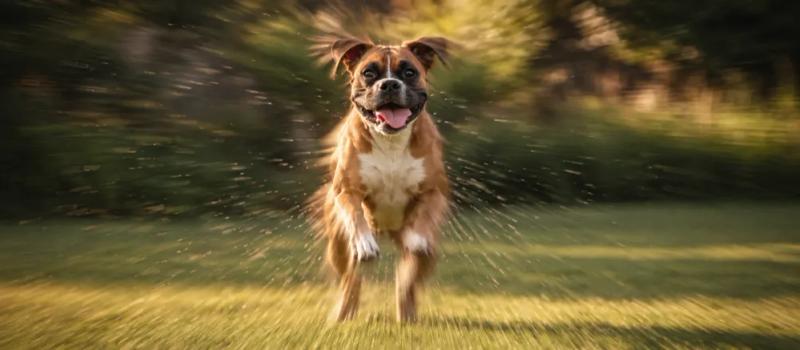
The Boxer standard describes a compact, square-built dog with a short coat. Fawn and brindle are its stated colours. Adult height ranges are 57 to 63 cm for males and 53 to 59 cm for females; its weight descriptions are tied to example heights rather than presented as one target for every Boxer.
That detail can disappear in a quick breed comparison. The Boxer dog care and temperament guide explains the measurements and a UK study of recorded health conditions. A playful breed description still needs to be considered alongside the individual dog's responses, previous experiences and care history.
Cane Corso
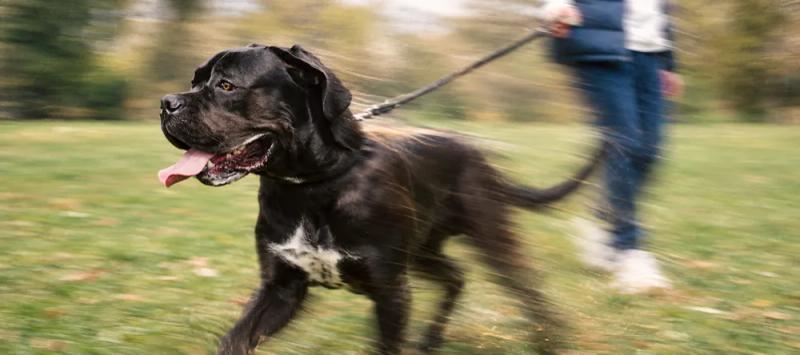
The Cane Corso standard describes a sturdy dog with a short, dense coat. It gives heights of 64 to 68 cm for males and 60 to 64 cm for females, with a 2 cm tolerance, and weights of 45 to 50 kg and 40 to 45 kg respectively.
The standard's guardian description is background to the breed. It does not establish that every Cane Corso will respond to people or unfamiliar situations in the same way. Our Cane Corso care and temperament guide covers the physical description, individual care planning and the limits of research about longevity.
Belgian Malinois
The Malinois is the short-haired variety within the Belgian Shepherd standard. Its coat is described as fawn with black overlay and a black mask. The shared standard gives ideal heights of 62 cm for males and 58 cm for females, with stated limits around those ideals.
An active working-dog description gives you a reason to take activity and learning seriously, but it cannot supply a universal exercise timetable. The Belgian Malinois care and temperament guide looks at physical and cognitive engagement, the breed's appearance and the questions to bring to your vet when planning a routine.
Assess the dog and your household
Write down what caring for the dog would involve on an ordinary weekday. Include the people responsible for walks, learning and veterinary visits. A written plan makes your assumptions visible before they become somebody else's responsibility. Be specific about who has agreed to each task.
For example, if one family member expects another to manage all training, resolve that expectation before choosing a dog. If visitors arrive frequently, discuss what you already know about the dog's reactions to unfamiliar people. Avoid filling in missing history with a breed stereotype, whether the stereotype sounds reassuring or frightening.
Veterinary guidance recommends discussing individual exercise needs and suitable cognitive engagement. Put both into your plan. Ask what activities fit the particular dog and what changes would mean that the routine needs another look. A generic recommendation for a breed cannot account for every life stage or health finding.
Physical size deserves a separate conversation. Use the measurements in the standards to understand the descriptions, then consider the practical responsibilities discussed in our guide to caring for large dog breeds. Include those practical questions when discussing the dog with everyone who will share its care.
If the history includes aggression, severe fear or treatment that has not helped, start with veterinary assessment. A trainer may help with everyday manners, but a clinical behaviour problem needs a veterinary care plan.
Build behaviour through reward-based learning
Begin with the behaviours you want the dog to learn. Veterinary behaviour guidance recommends rewarding a new behaviour each time it occurs while it is being learned. Once the behaviour is established, rewards can become intermittent. The guidance does not mean that rewards should disappear or that every household needs an identical schedule.
Make the request clear when discussing training with a professional. Ask how the desired behaviour will be taught, what the dog receives when it responds and how the trainer handles difficulty. Our guide to reward-based dog training offers more detail on the learning approach.
There is research behind the concern about aversive methods. A 2020 study compared dogs attending training schools that used different proportions of aversive and reward-based methods. Dogs in the heavily aversive group showed more stress-related behaviour during training than those in the reward-based group. They also showed larger increases in cortisol after training.
The study was not randomised. Dogs and pet parents were recruited through the schools they attended, so the results show an association and cannot prove that the training method alone caused every observed difference. Veterinary behaviour guidance separately recommends methods centred on rewarding desired behaviour and opposes aversive techniques.
Fear needs particular care. It can contribute to aggression, and the guidance warns that punishment in aggression cases can worsen the behaviour and increase bite risk. If the dog growls, take that observation to the veterinary team so they can help you understand what is happening.
For puppies, positive exposure means paying attention to the response. Meeting more people or encountering more places is not automatically helpful if the puppy is distressed. Ask your vet about suitable positive experiences and support when a situation is difficult. Counting encounters tells you less than noticing how the puppy responds to them.
Make everyday surroundings manageable
A care plan includes the environment in which the dog spends its day. Veterinary guidance gives a simple example: if a dog becomes distressed by people passing a window, closing the blinds or moving the dog away from that view can avoid the immediate trigger. You can change the surroundings while arranging help.
Change the arrangement that brings the dog into contact with the trigger. You don't need to repeat the encounter to see whether the dog will eventually tolerate it. Avoiding the immediate trigger is one part of management; the longer-term plan depends on a professional assessment.
Enrichment can be part of everyday care. The guidance discusses food toys as one example of changing what a dog can do in its environment. It also makes a clear distinction: some dogs with behaviour problems are too distressed for enrichment alone to help. A new toy cannot replace clinical assessment when it is needed.
For a young dog, review ordinary household hazards as well. Put away clothes, shoes and loose toys; secure rubbish containers and accessible cupboards; stabilise items that could tip or fall. These are practical preparations described in life-stage care guidance.
Walk through those arrangements with the people who share the care. A written household plan can state who is responsible for each task without making anyone guess what has already been done.
Bring behaviour concerns to your vet
Describe the behaviour in everyday terms when you contact the clinic. Explain what you saw, where it happened and what was happening around the dog. You can say that the dog growled when a visitor approached, for instance, without deciding on a diagnosis yourself. Keep the account as close to the observation as you can.
Veterinary guidance places behavioural assessment within ongoing care. The physical examination can also consider pain, movement and other health findings. This allows the conversation to cover the individual dog rather than treating every difficulty as a training failure.
A trainer may help teach manners or address ordinary pulling on a lead. Aggression, severe fear, self-injury or problems that have not responded to veterinary treatment can require referral for veterinary behaviour care. Ask your existing vet about suitable options rather than assuming a particular specialist is available locally.
Our guide to help with aggressive behaviour discusses that professional-support decision in more detail. Use it to prepare questions, while leaving diagnosis and treatment with the veterinary team.
Keep the care history organised between appointments. Nuzzy's PetLife supports weight logs and vet visit history, which can help you keep those records together. PetMap supports place discovery when you are looking for veterinary services. Contact a service directly to discuss the support your dog needs.
Frequently asked questions
How should families assess guard dog breeds?
Consider the individual dog's behaviour, experience and the household's ability to provide care. A breed standard describes an ideal; it cannot guarantee family suitability. Discuss known aggression or severe fear with a vet, and ask about appropriate training support for everyday manners.
Are guard dog breeds low maintenance?
A guard-dog label does not tell you how much care an individual needs. Activity, learning, household preparation and veterinary assessment still need to fit that dog. Compare those responsibilities directly instead of treating a short coat or a working description as proof of easy care.
Choose your next step
Start with the care question you need help answering, whether it concerns everyday learning, an observed behaviour or veterinary history. Use PetMap to explore relevant local services, then explain the question when you contact them. A specific request makes it easier to discuss the support you are seeking.
Sources
- FCI Dobermann standard 143
- FCI Boxer standard 144
- FCI Cane Corso standard 343, valid standard 25 September 2023
- FCI Belgian Shepherd standard 15
- AAHA 2015 canine and feline behavior management guidelines
- AAHA 2019 canine life stage guidelines, Behavior
- Vieira de Castro et al. Does training method matter? Evidence for the negative impact of aversive-based methods on companion dog welfare. PLOS ONE, 2020.
- Creevy et al. 2019 AAHA Canine Life Stage Guidelines.