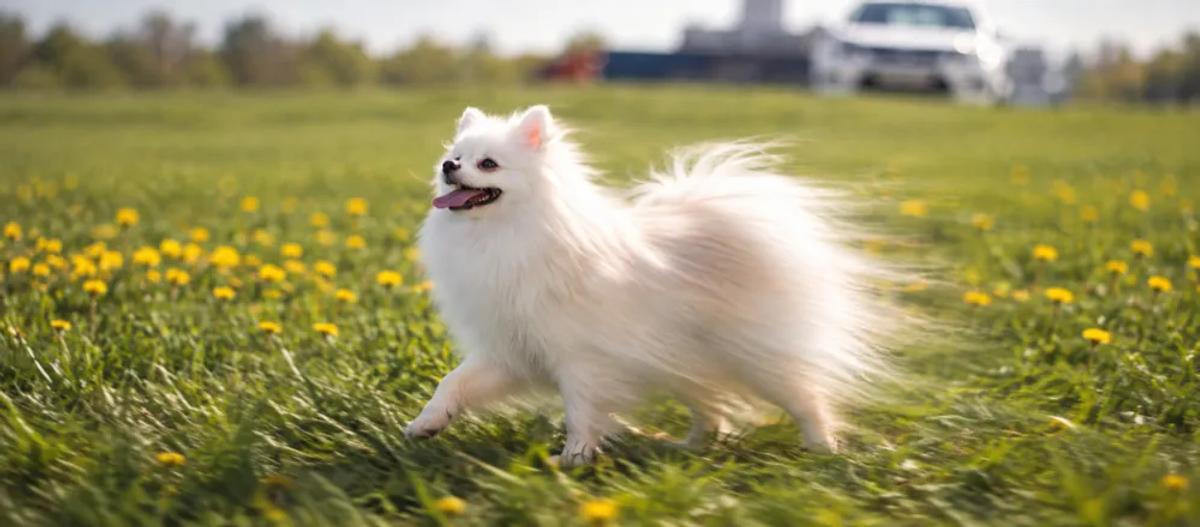
A Pomeranian is a compact dog with a soft, fluffy undercoat and a long, straight outer coat. Its care plan should cover comfortable grooming, dental care, suitable food and individual veterinary reviews. Knee concerns and coughing deserve assessment when they arise; a breed description cannot diagnose either.
Seek veterinary care immediately if your dog has difficulty breathing, blue gums or tongue, or faints. Those signs need urgent attention, whether or not anyone has previously mentioned tracheal collapse.
Understand the double coat
The breed standard describes two coats: a soft undercoat and a longer, straight outer coat that is harsher in texture. The coat is abundant around the neck, shoulders and chest. This is useful information for a grooming conversation, rather than a reason to select a routine from a photograph.
Ask the groomer to demonstrate how they work with your dog's coat and which parts you should maintain between visits. Explain your experience with the tools and any handling the dog finds difficult. If you cannot follow a demonstration comfortably, ask for another explanation before taking the task home.
When deciding among breeds, compare small dog breeds with coat care and veterinary support in mind. You can also read about Shih Tzu coat-care planning to compare a different long-coat description. The comparison should help you ask better questions, without assuming the same care intervals suit both dogs.
Make grooming comfortable and manageable
Regular skin and coat checks can reveal matting, fur loss, injuries or other changes that need veterinary assessment. Discuss the appropriate brushing, bathing and trimming intervals for your Pomeranian. General wellness guidance calls for care suited to the animal; more frequent bathing is not automatically better.
Handling practice can start with the dog relaxed and the tools still unused. Let them investigate a brush and pair that introduction with rewards. Practise gentle handling in small steps. You do not need to turn every practice session into a completed groom.
Watch how your dog responds. Pulling away, freezing or other stress signs are cues to pause and make the next step smaller. If grooming is stressful for either of you, seek guidance from your veterinarian or a suitably qualified professional.
Our guide to a manageable grooming routine covers preparation and professional help. Before an appointment, ask the groomer how they provide breaks and what they want you to practise at home. A clear answer is more useful than a promise that every session will be quick.
Agree who handles the routine in your household. Show the backup carer which steps the dog accepts so they can continue from the same point. Keep the focus on comfortable care rather than completing a list of tasks regardless of the dog's response.
Understand knee concerns without self-diagnosing
Patellar luxation means that the kneecap moves out of its normal position. A study published in 2016, using primary-care records from England, found higher odds of this diagnosis in Pomeranians than in crossbred dogs. That is an association in a study population, not proof that your dog has the condition.
An intermittent skipping movement, where a rear leg is briefly held up before normal walking resumes, can be a sign. A veterinarian performs an examination to assess patellar luxation and its severity. The movement alone does not tell a pet parent the diagnosis, grade or appropriate treatment.
If you notice a change, describe it to the clinic: when it started, whether it comes and goes and which leg appears affected. Keep observations separate from any explanation you have read online. The vet needs to assess the dog rather than confirm a conclusion drawn from a breed profile.
Ask what the examination means for this dog's care. If a condition is diagnosed, have the clinic explain the next steps and follow-up plan. The research association cannot choose those steps for you.
This is also why breed statistics need context. Higher odds in one comparison do not translate directly into an individual probability, and English veterinary records are not a current survey of Pomeranians in India. They can identify a useful topic for assessment while leaving the clinical decision with the veterinarian.
Take coughing and breathing changes seriously
Tracheal collapse can cause a persistent, harsh, dry cough. A cough sound does not establish the diagnosis. Contact a veterinarian about persistent coughing, and seek immediate care for difficulty breathing, blue gums or tongue, or fainting.
A Korean study published in 2024 examined 110 small dogs already identified with tracheal collapse, including 25 Pomeranians. Because this was a selected clinical group, those numbers do not measure how common the condition is in the wider Pomeranian population.
The study also found that cough severity was not associated with the location or grade of collapse assessed by fluoroscopy. This is a reason to avoid inferring the degree of airway collapse from how dramatic a cough sounds. Veterinary assessment is needed.
When contacting the clinic, describe the breathing change clearly and follow its instructions.
Keep daily care individual
Choose a complete food suited to life stage and discuss amounts using the dog's ideal body condition, age, size and lifestyle. Bring food details and an account of treats to a feeding review. A Pomeranian label on a bag or a portion copied from another dog cannot supply that individual assessment.
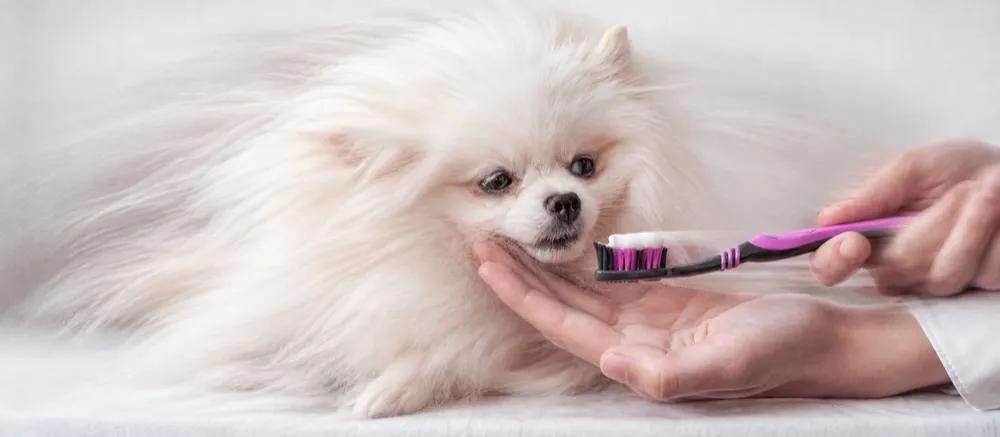
Dental care needs a gradual introduction as well. General guidance supports working towards daily brushing with a suitable brush and toothpaste. Begin with comfortable handling around the face and lips, reward acceptance and introduce the brush in small steps. Stop if the dog is uncomfortable and seek advice about concerns.
The guide to gradual toothbrushing practice explains the progression. Agree who will practise it and make sure anyone taking over understands the stage your dog accepts.
Frequently asked questions
Is white a recognised Pomeranian coat colour?
White is among the whole colours listed in the breed standard used for this guide. That describes appearance; it does not establish a health advantage or a different clinical care plan. Ask about the individual dog's coat, handling and health history regardless of colour. A preference for a particular appearance should leave room for those practical questions.
What should I prepare before bringing home a Pomeranian puppy?
Arrange a veterinary conversation about individual care, have details of the puppy's current food and records, and ask how to introduce coat and dental handling gradually. Identify who will provide daily care and which groomer or clinic you can contact for help. Ask for demonstrations of unfamiliar tasks. You can build the plan around the puppy's needs without trying to complete every grooming step immediately.
Find care and keep the history together
Use PetMap to explore vet clinics and contact them about your dog's needs and their appointment arrangements. Keep vet-visit history in PetLife and bring any requested earlier reports. For an urgent breathing concern, seek veterinary care immediately; organising the record can wait.
Sources
- O’Neill DG et al. The epidemiology of patellar luxation in dogs attending primary-care veterinary practices in England. Canine Genetics and Epidemiology (2016).
- Kim et al. A retrospective study of tracheal collapse in small-breed dogs: 110 cases (2022 to 2024). Frontiers in Veterinary Science (2024).
- The Royal Kennel Club. Pomeranian breed standard (April 2025). Coat, frame and colours.
- Cornell Riney Canine Health Center. Tracheal collapse.
- Cornell Riney Canine Health Center. Patellar luxation.
- WSAVA Global Dental Committee. Toothbrushing toolkit.
- WSAVA Global Nutrition Committee. Guidelines on selecting pet foods (2021).
- Cohen A. Grooming: cooperative care. Cornell Riney Canine Health Center (5 February 2026).
- WSAVA. Principles of Wellness.