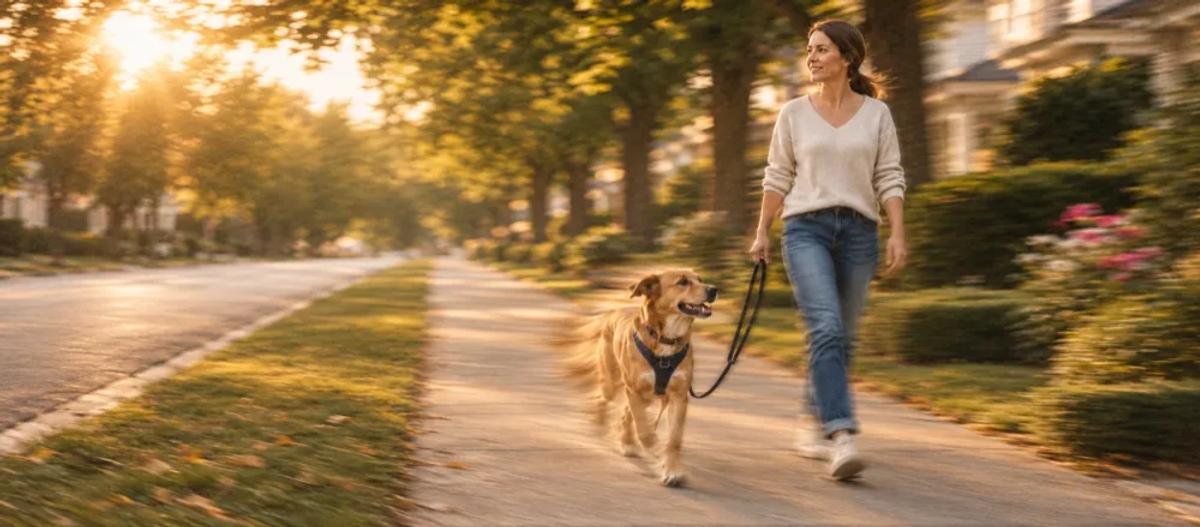
Plan dog walking around your dog and the conditions. Use suitable control, allow time for safe sniffing and watch how your dog handles the walk. Bring water, consider shade and change the plan when heat or humidity makes strenuous activity unsuitable. The route can include places to pause and investigate.
A fixed number of minutes would be convenient. You’ll need to discuss your dog’s individual activity needs with your veterinary team. Start with a walk you can describe accurately: where you go, what your dog does there and which parts are difficult to manage.
Prepare for the outing
Choose suitable control and a route
Discuss the lead and other walking equipment with your vet, particularly if you are unsure what suits your dog. Describe the setting as well as the dog. Walking through a busy entrance and walking in an open area can raise different practical questions for the person managing the outing.
Decide who will hold the lead and how you will leave the building. If a family member is taking over, explain the arrangement before they go. You might agree on a familiar entrance or a place to meet afterwards. These small decisions are part of preparing an outing, without needing a rule for every step.
PetMap can help you discover pet-friendly places when you want another option. Check entry arrangements directly before setting out. Ask about the access details that matter for your visit, and decide whether the place fits the walk you intend to take. A listing alone cannot make that decision for your dog.
Prepare for the conditions
Bring water and a bowl, and provide opportunities for your dog to drink. Include shade in the plan where it is available. Think about the conditions for the whole outing, including the return, rather than only the moment you open the door.
Avoid strenuous exercise during the hottest or very humid conditions. A familiar departure time is a habit you can change. If the conditions are unsuitable, revise the outing instead of treating the usual route as an obligation to complete.
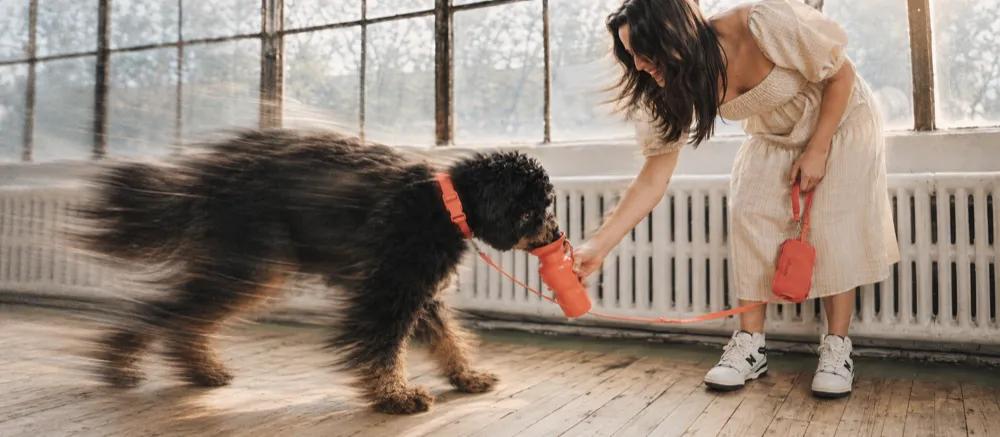
Give your dog time to explore
Let your dog sniff without rushing them along when it is safe to do so. That can be part of the walk itself. A dog does not need to cover a long route for the outing to offer opportunities to investigate their surroundings.
Safe choice can also include direction. Suppose you reach a quiet junction with two suitable ways back. You could let your dog choose between those options. You still choose which options are available and keep control of the outing; allowing choice does not mean following every turn the dog wants to take.
Pay attention to how the dog handles the walk. Stopping or lying down is something to notice, particularly in a dog that has difficulty walking. Describe what happened during the walk without guessing why the dog stopped. Bring concerns about the dog's ability to manage outings to your veterinary team.
It can be frustrating when the route you imagined is different from the walk you end up taking. Leave room for that difference. If your dog spends time sniffing somewhere suitable, you do not have to hurry them on merely to reach a point you selected before leaving home.
Handle pulling through training
If your dog pulls, make loose-lead walking a specific training task. Reward walking beside you. When pulling begins, methods used in training include stopping or changing direction until the dog returns. Keep that movement gentle and avoid jerking the lead.
Our guide to teaching loose-lead walking explains the reward-position method and what to ask a trainer. You can describe the difficulty concretely: the dog moves ahead, the lead becomes tight, and you want help teaching a different position.
Fear, anxiety or behaviour that threatens safety needs veterinary assessment and appropriate referral. Do not assume those concerns are solved by practising walking beside you. For ordinary training help, look for a vetted trainer who uses positive reinforcement and can explain what they do when the dog pulls.
Adapt the walk to the day
Place the outing within your dog's wider exercise plan. Discuss individual activity needs with your veterinary team, and keep the dog's preferences in view when choosing enrichment. The walking plan can then support the rest of the routine without carrying every activity need on its own.
Heat may mean changing the time or the planned activity. Choose cooler conditions, keep water available and avoid strenuous exercise during heat or high humidity. The guide to adapting walks in hot weather covers planning and the warning signs that need veterinary attention.
If you become concerned that your dog is overheating, stop the outing, move into a cooler place and contact a vet for urgent advice. Do not finish a planned circuit before seeking help. The route can wait.
You can also have supervised indoor games available for time at home. A simple food search is one option: let the dog see where food is placed, then let them find it. Make the game more challenging as they learn it, without assuming it replaces every need for physical activity.
Frequently asked questions
How often should you walk your dog?
Discuss an individual activity plan with your veterinary team. For young and mature adults, that includes exercise needs and mental engagement; enrichment choices across ages also depend on the dog. The number of walks is part of that individual discussion. Describe your current routine so the advice can address the dog and the household carrying it out.
How long should I walk my dog?
Use the individual plan, your dog's response and the conditions to guide the outing. Leave room for safe sniffing and change outdoor plans when heat or humidity makes the intended activity unsuitable. Discuss duration when reviewing the plan with your vet.
Sources
- 2019 AAHA Canine Life Stage Guidelines. Creevy and colleagues.
- Canine enrichment ideas. Aly Cohen, Cornell Riney Canine Health Center, 2023.
- Summer heat safety tips for dogs. Cornell Riney Canine Health Center.
- Make it stop: unruly behaviors. E’Lise Christensen, AAHA conference proceedings, undated.
- Changing behaviors. 2015 AAHA Canine and Feline Behavior Management Guidelines.