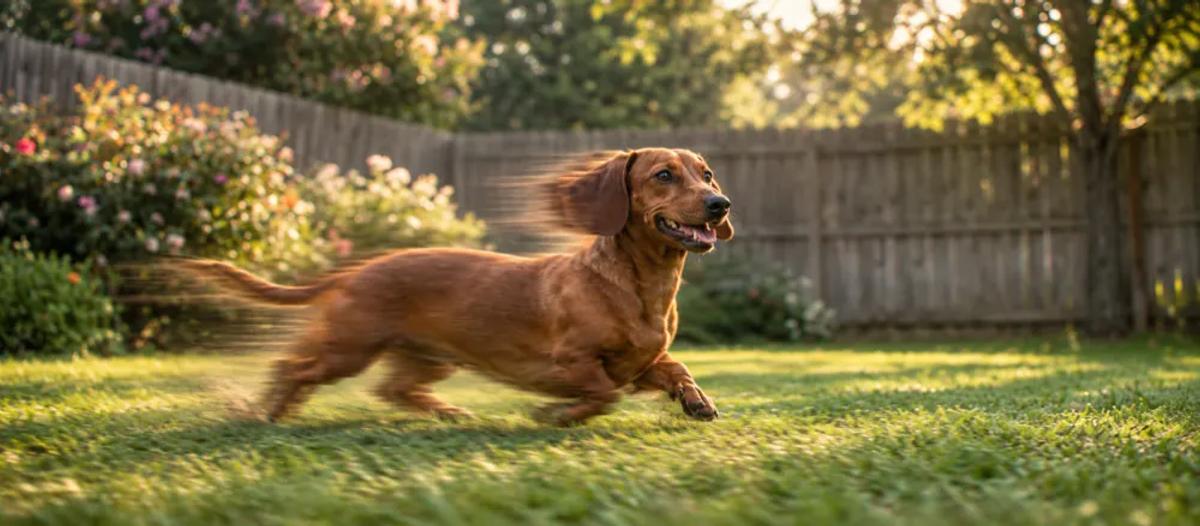
A Dachshund has a long, low body and a smooth, wirehaired or longhaired coat. Its care plan should account for the individual dog's coat, health history and activity needs. Back health deserves a specific veterinary conversation: research identifies associations with disc disease, but those findings do not provide a guaranteed prevention routine.
If your Dachshund shows back discomfort, contact a veterinarian. Wobbliness or difficulty using the rear legs should not be treated as a breed quirk or something to diagnose from a video at home.
Understand the coat and size descriptions
Smooth, wirehaired and longhaired are the three coat types described in the breed reference used here. Standard and miniature are size categories in that reference. These terms help describe a Dachshund, but they do not establish its ideal body condition or the care it personally needs.
When reading a profile or speaking with a previous carer, separate description from veterinary advice. Ask which coat-care tasks the dog receives, what handling they accept and whether there are existing health reports to review. A category name is a starting point for that conversation.
If a Dachshund is one of several dogs you are considering, compare small dog breeds by care commitments as well as appearance. Keep the time and help you can provide in view. You are planning for an individual animal, so leave space to change the routine after a veterinary assessment.
Read back-health research carefully
Intervertebral disc disease, often shortened to IVDD, features prominently in Dachshund research. Two studies illustrate why it is worth understanding how a result was produced before turning it into advice.
A study published in 2016 examined responses to an online survey carried out in 2015. It compared Dachshunds with a reported veterinary diagnosis of IVDD against dogs with no previous signs. Researchers examined associations with features including breed variety and reported lifestyle. The authors explicitly said they could not make firm recommendations on reducing IVDD risk from those results.
That limitation matters. An association between a routine and disease does not establish which came first, or whether the routine caused the outcome. Pet parents may change a dog's activity after a health problem. Survey findings cannot settle that question by themselves. They should not be converted into instructions about jumping, exercise duration or supplements.
A second study, published in 2026, examined spinal-health measures in 4,295 Dachshunds across populations in the UK, Norway and Denmark. The UK analysis used reported disc-disease status, while the Norwegian and Danish analyses used groups based on the number of disc calcifications. Those are different outcomes, not interchangeable measures of one event.
The study found associations with coat type and less consistent associations with size. This does not establish that a coat causes disease or that one variety offers a health guarantee. It also does not justify combining the study groups into a single risk percentage for a puppy in India.
Discuss back health, previous symptoms and any existing reports with your vet.
Recognise changes that need veterinary attention
A dog with a spinal-disc problem may show back discomfort, a wobbly gait or weakness in the rear legs. Severe disease can leave a dog unable to get up or use those legs. These are reasons to seek veterinary assessment, not a checklist for making your own diagnosis.
Contact your veterinarian at the first sign of back discomfort. Tell the clinic what you have noticed and when it began. If your dog cannot get up or use the rear legs, describe that clearly when requesting care. Ask the clinic for instructions about bringing the dog in rather than improvising handling from online demonstrations.
Keep observations separate from conclusions. Saying when a change started and what the dog is doing gives the clinic concrete information. Calling it a slipped disc before assessment adds a diagnosis that has not been established.
Have the clinic's contact details accessible to everyone who cares for the dog. Check how the practice handles urgent concerns and whom it directs you to when it is closed. These arrangements are worth making before an unexpected problem.
Discuss activity for this dog
General wellness guidance supports opportunities for movement, play and exploration, as well as a comfortable place to rest. Work with your vet to fit that guidance to your Dachshund's age, health and history.
Prepare a description of the dog's current routine and any changes you have noticed. Ask whether earlier diagnoses or current concerns alter the plan, what activities the vet considers appropriate and what should prompt a review. If the dog has already been treated for a back problem, bring the instructions from that care rather than replacing them with a general breed article.
Be careful with prevention promises attached to exercise rules. The survey described above was not a trial assigning dogs to different activities, and its authors did not establish a routine that prevents IVDD. That leaves an important limit on what we can recommend from it.
Agree on the plan as a household and make sure anyone covering care can find it. If something is unclear, ask the clinic to explain before turning an uncertain instruction into a daily rule.

Match coat care to the dog
Coat type gives you a reason to ask about grooming, but the individual dog determines the routine. Regularly check skin and coat for changes such as matting, fur loss or injuries. Discuss abnormalities with a veterinarian and ask about appropriate brushing, bathing or trimming intervals.
Introduce grooming tools gradually, allowing a relaxed dog to investigate them and pairing that introduction with rewards. Practise handling in small steps, with pauses when the dog shows stress. If grooming becomes difficult, seek qualified help instead of trying to finish a full session through discomfort.
Our guide to preparing for grooming covers the general process. Use a professional appointment to ask for a demonstration relevant to your Dachshund's coat and explain which tasks you can manage at home.
Frequently asked questions
What does miniature Dachshund mean?
Miniature is a size category in the breed reference used for this guide; standard is another. It is a description, not a veterinary weight-management goal. Do not change a dog's feeding simply to make it fit a label. Individual nutrition guidance bases the plan on factors such as ideal body condition, age, size and lifestyle, with veterinary input. Ask about the actual dog's needs when a size description is unclear.
What coat types do Dachshunds have?
Dachshunds have smooth, wirehaired or longhaired coats. These descriptions are useful when discussing grooming tools, handling and professional support. Ask what care the individual dog currently receives and have the routine demonstrated if it is unfamiliar. Coat type alone does not establish which dog will stay healthy; research associations should not be treated as a guarantee about a particular Dachshund's future back health.
Keep earlier care information accessible
Use PetLife to keep your Dachshund's vet-visit history together. Before an appointment, ask which previous reports the clinic needs and prepare your current questions. If a new back concern arises, contact the veterinarian promptly rather than waiting to complete the records first.
Sources
- Packer RMA et al. DachsLife 2015: an investigation of lifestyle associations with the risk of intervertebral disc disease in Dachshunds. Canine Genetics and Epidemiology (2016).
- American Kennel Club. Dachshund breed description. Coat and size categories only.
- Hopper M et al. Dachshund spinal health by coat and size type. Journal of Veterinary Internal Medicine (2026).
- Cornell Riney Canine Health Center. Intervertebral disc disease.
- WSAVA Global Nutrition Committee. Guidelines on selecting pet foods (2021).
- Cohen A. Grooming: cooperative care. Cornell Riney Canine Health Center (5 February 2026).
- WSAVA. Principles of Wellness.