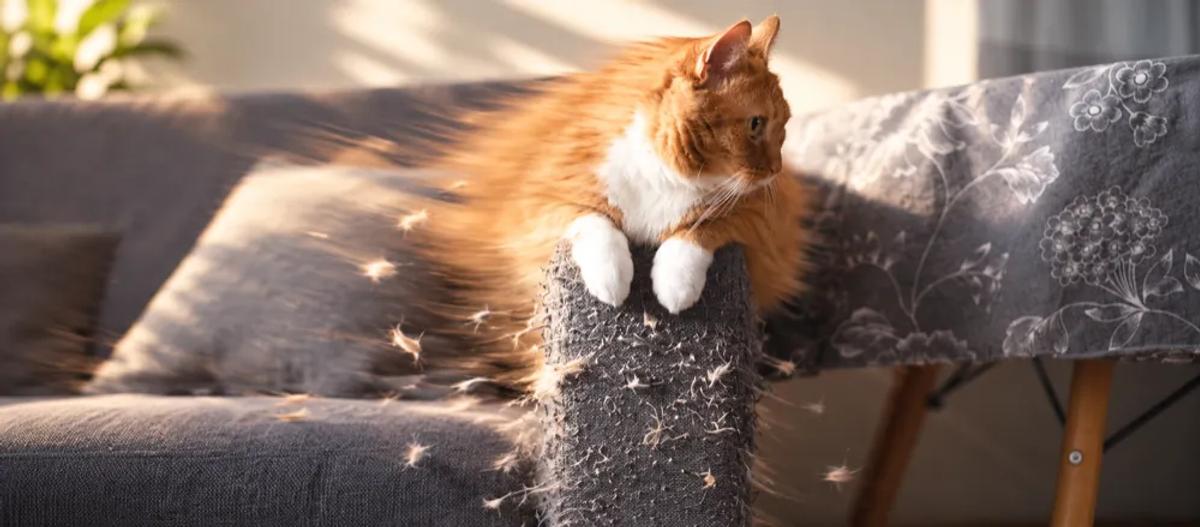
Cats scratch as part of normal behaviour, including leaving scent marks. To address furniture scratching, provide suitable scratching surfaces and consider their material and placement. Use rewards to encourage the behaviour you want. If the scratching pattern has changed, arrange a veterinary assessment and review what is happening at home.
Finding fresh marks on a chair is frustrating. The practical task is to give your cat an appropriate place to carry out a normal behaviour.
Why scratching happens
Scratching is one of the ways cats mark their surroundings. Scent glands in the pads of the feet contribute to that marking. A cat needs appropriate surfaces to scratch at home, including when you are trying to protect the furniture.
Start from that need when you assess the problem. Look at the object the cat scratches and the alternatives available nearby. The presence of claw marks is a reason to review the scratching setup; it does not, by itself, explain every part of the cat’s behaviour.
Keep the goal practical. You are providing an appropriate scratching outlet that the cat can use. That means considering the cat’s choices when you select a surface and deciding where it can fit into daily life in the home.
An unused scratching post still leaves you with a question to work through. Review the available options with your cat’s individual habits in mind, rather than expecting the purchase alone to solve the furniture problem.
Choose surfaces your cat can use
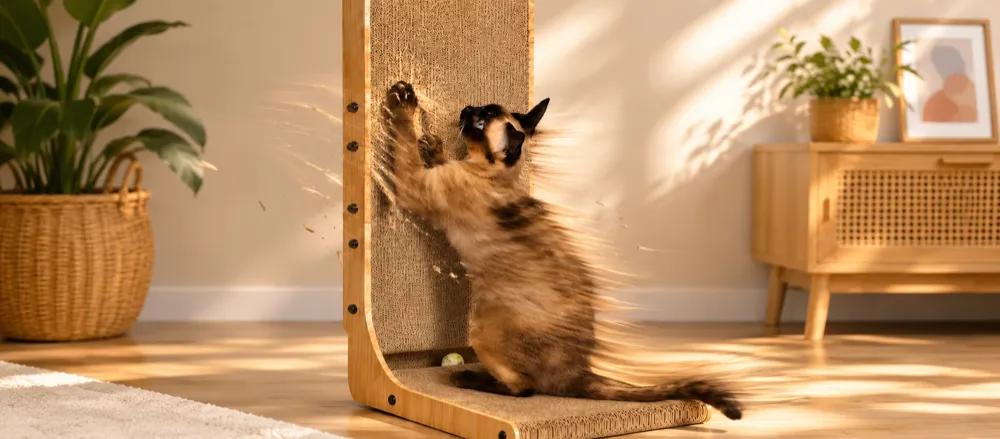
Cats may prefer different scratching materials. Rope, cardboard, carpet and wood are options to try. Offer suitable choices and observe which surface your cat uses.
Consider placing scratching surfaces near resting areas or routes the cat uses regularly. The location should make sense within the home. Look at how the cat moves between its familiar places and where it can reach the scratching option.
Review material and placement together. If a cardboard surface is unused in an out-of-the-way corner, its location is part of the question. If the cat uses one material and leaves another alone, that preference is useful information when you decide what to provide next.
In a home with several cats, keep access in view. Resources should be available in different locations so individual cats have choices. Check whether every cat can reach an appropriate scratching area without being blocked by another cat.
Encourage use of the chosen surface
Use rewards your cat values when teaching the behaviour you want. Food, play and attention are possible rewards, depending on the cat’s preferences. Keep training sessions brief and end before interest fades. Cats learn at individual rates.
Avoid verbal or physical punishment. Spraying the cat with water or throwing an object at it can increase fear and damage the relationship. Respond by reviewing the setup and using reward-based training.
Make suitable play available as part of everyday care. Use toys the cat can chase or manipulate and allow a catch during interactive play. Keep hands and feet out of the game, and put away string toys or toys with swallowable parts when play ends.
Pay attention to whether your cat uses the surface during training and at other times. Keep using rewards it values, and review the material or location if the surface is left unused.
Review what has changed
If scratching starts in a new place or becomes part of a changed routine, look at the wider situation. Intercat tension and unmet resource needs can be involved. Watch where the cat scratches and what is happening around that location, including whether another cat is nearby.
Staring, blocking a route or repeated avoidance can matter even without a fight. Learning to read your cat’s body language helps you describe those interactions. Consider the posture and the surroundings together; do not decide the cause from one gesture.
Arrange veterinary assessment for changed behaviour. Medical problems and social tension can overlap, and a change at home does not establish which explanation applies. Tell the vet about any new hiding, reduced jumping or other changes in the usual routine.
A scratched sofa and a changed relationship between cats may need attention at the same time. Review access to scratching areas while seeking help with the behavioural change. Understanding changes in cat behaviour gives the broader observation context for that discussion.
When cats share the space
Check that each cat has access to scratching surfaces and other resources in separate locations. Watch the route as well as the destination. If one cat is standing in the way and the other repeatedly leaves, that interaction belongs in your review of the setup.
Tension between cats can be associated with increased territorial scratching. That possibility deserves consideration when the household has changed. It still needs to be assessed alongside the individual cat’s health and other observations.
If the pattern follows a newcomer’s arrival, review the guide to introducing cats to the home. It covers the separate starting space and staged meetings, with guidance on when to return to an earlier stage.
Questions about furniture scratching
Why does my cat scratch furniture?
Scratching is normal behaviour and includes scent marking. Provide appropriate scratching surfaces and consider which materials your cat accepts. Furniture scratching alone does not establish that the cat is stressed or acting out of spite.
Why has my cat suddenly started scratching furniture?
A changed pattern can involve the home environment or tension between cats, but scratching alone cannot identify the cause. Review access to suitable scratching surfaces and describe other changes you have noticed. Arrange a veterinary assessment because changes in behaviour can also reflect medical problems.
Ask for help with a change
If the behaviour has changed, arrange a veterinary assessment.
Nuzzy PetMap can help you look for vet clinics. Take your observations about the scratching pattern and wider routine into the discussion.
Sources
- AAFP task force. 2024 AAFP intercat tension guidelines: recognition, prevention and management. Journal of Feline Medicine and Surgery (2024).
- Ellis SLH et al. AAFP and ISFM Feline Environmental Needs Guidelines. Journal of Feline Medicine and Surgery (2013).
- Quimby J et al. 2021 AAHA/AAFP Feline Life Stage Guidelines. AAHA guideline publication (2021).