Most common fruits are safe for dogs in small amounts, offered as an occasional treat rather than a meal. The exceptions worth taking seriously are grapes and raisins, which are genuinely toxic and belong on the never-feed list. For everything else, the same short checklist keeps fruit safe every time: small pieces, washed, seeds and pits removed, and never more than a little.
The checklist that covers all fruit
Fruit belongs on the side, well outside the main diet. Vets suggest keeping treats and extras to about 10 percent of a dog's daily calories, and fruit sits inside that share. Beyond the amount, it is the handling that keeps it safe:
- Wash it, the way you would for yourself.
- Take out pits, large seeds and hard cores (there is more on why below).
- Cut it into small pieces that are easy to chew and swallow.
- Try one new fruit at a time, in a small amount, and watch for a day. Loose stools mean it did not agree with your dog, so you stop there.
Fruit is mostly water and sugar, with some fibre and a few vitamins. It makes a nice cool treat on a hot day, and a few small frozen pieces of banana or watermelon go down well through an Indian summer and last longer than the fresh version. It is not something a dog needs in any amount, and it will not paper over a poor diet.
Fruits that are usually fine, in moderation
For most healthy dogs, small amounts of these are okay:
- Mango (aam): peeled, with the big pit removed. It is sweet, so a few small pieces is plenty.
- Banana: easy to digest but high in sugar, so a couple of slices at a time.
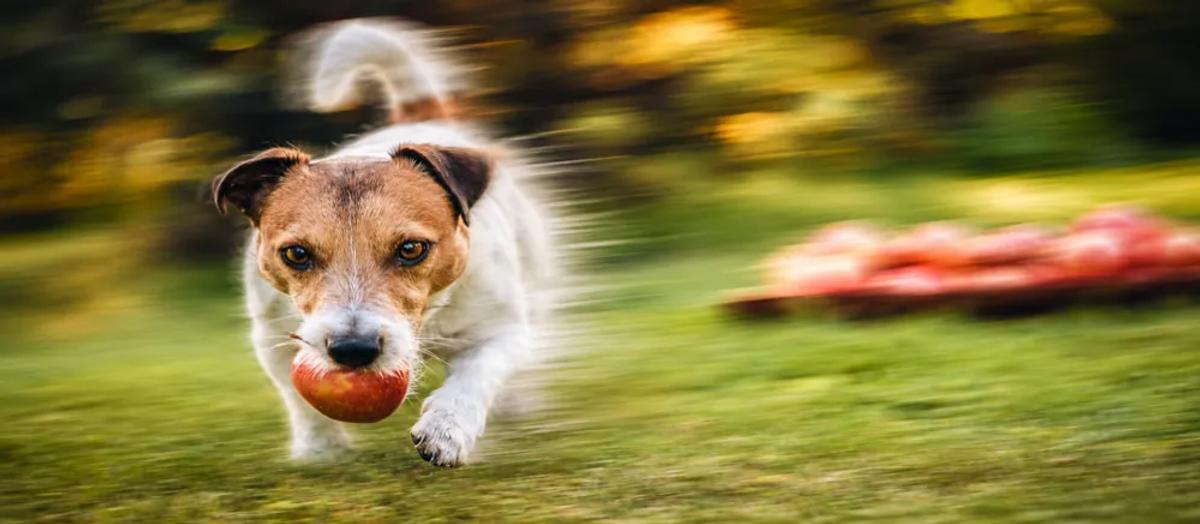
- Apple: fine once the core and seeds are out.
- Watermelon: refreshing in the heat, with the rind and seeds taken off.
- Papaya: peeled and deseeded, in small pieces.
- Guava (amrood): okay in small amounts; scoop out the hard seeds first.
- Chikoo (sapota): very sweet, so a small piece now and then, with the seed removed.
- Plain coconut flesh: a little is fine; skip anything sweetened.
- Berries such as strawberry and blueberry: small, soft and easy, a few at a time.
- Orange and other citrus: a peeled, seedless segment or two. Some dogs dislike the sourness, which is perfectly fine.
None of these are "superfoods" for dogs, whatever the internet claims, and none of them stand in for a balanced diet. They are safe, pleasant treats for a dog that is already eating well.
Fruits and parts to be careful with
- Grapes, raisins and currants (kishmish): do not feed these at all. Grapes and their dried forms have been reported to cause kidney failure in dogs, and vets still do not know the exact cause, so there is no amount considered safe. Keep them, and anything made with them, well out of reach.
- Pits and large seeds: the stones of fruit in the plum family contain cyanide, and the more common everyday danger is a swallowed pit blocking the gut. Take out pits and cores before you hand over any fruit.
- Too much sugar: even safe fruit is sugary, so overdoing it means an upset stomach, and it is best kept to a minimum for overweight dogs.
How much is too much
For a medium dog, that means a few small pieces rather than a bowlful. Once fruit and other treats push past that 10 percent share of the day, you are cutting into the balanced part of the diet, which is the part actually keeping your dog well. When you are unsure, less is the safer answer, and plain fresh fruit always beats anything tinned or sweetened. If you want the same logic for eggs and dairy, there is a separate guide for those.
Frequently asked questions
Can dogs eat mango skin or the seed?
Give the soft flesh only. The skin is hard to digest, and the large pit is both a choking hazard and a blockage risk, so peel the mango and take out the pit first.
Can dogs eat banana every day?
A little is fine, but banana is high in sugar, so daily banana adds up. Keep it occasional and small, especially for a less active or overweight dog.
Can one grape hurt a dog?
Treat any grape or raisin as a reason to call your vet quickly. There is no established safe amount and the kidney risk is real, so keep them away entirely and get advice quickly if your dog does eat some.
Can dogs eat apple seeds?
Keep the seeds and core away. Apple flesh is fine; keep back the seeds, and the core, which is a choking risk. Slice the apple and drop the middle.
The bottom line
Mango, banana, apple, watermelon, guava and a few berries all work as small, occasional treats, washed and deseeded. Grapes and raisins are the hard no. Keep the fruit to roughly a tenth of the day's food, so it stays a small extra on top of the complete and balanced diet that does the real work. For the foods that are outright dangerous, the guide to toxic foods has the full list.
Sources
WSAVA Global Nutrition Guidelines. World Small Animal Veterinary Association, Global Nutrition Committee (treats and extras about 10 percent of daily calories; a balanced diet as the foundation).
Potentially Dangerous Items for Your Pet. U.S. Food and Drug Administration, Center for Veterinary Medicine (grapes and raisins hazardous; Prunus-family fruit pits contain cyanide and pose an obstruction risk).
Household Food Items Toxic to Dogs and Cats. Cortinovis C, Caloni F, Frontiers in Veterinary Science, 2016 (open access) (grapes and their dried products cause renal failure in dogs; the mechanism is unknown).